The single most important thing about Robotera’s May 8 funding announcement is not the size of the round. It’s not even who led it. It’s where the robots are.
The Beijing-based humanoid maker — known in Chinese as 星动纪元, the company spun out of Tsinghua’s CrossDimension Lab in 2023 — closed more than USD $200 million in a strategic round led by SF Group (顺丰, China’s biggest private parcel-delivery network), with participation from HSG, IDG Capital, Hillhouse Investment, CICC Capital, Jingming Capital, SparkEdge, Luxin VC, Unite Pioneers, and Longqi. That’s the venture half of the cap table. The half that matters more sits next to it: industrial partners including KENGIC, Dongfeng Asset Investment, ICBC Capital, and funds affiliated with China Unicom.
The combined list is unusual. Most humanoid Series Bs in 2024–2025 raised from generalist tech VCs and the occasional sovereign. Robotera’s May 8 round raised from the customers.
What’s actually happening in the warehouses
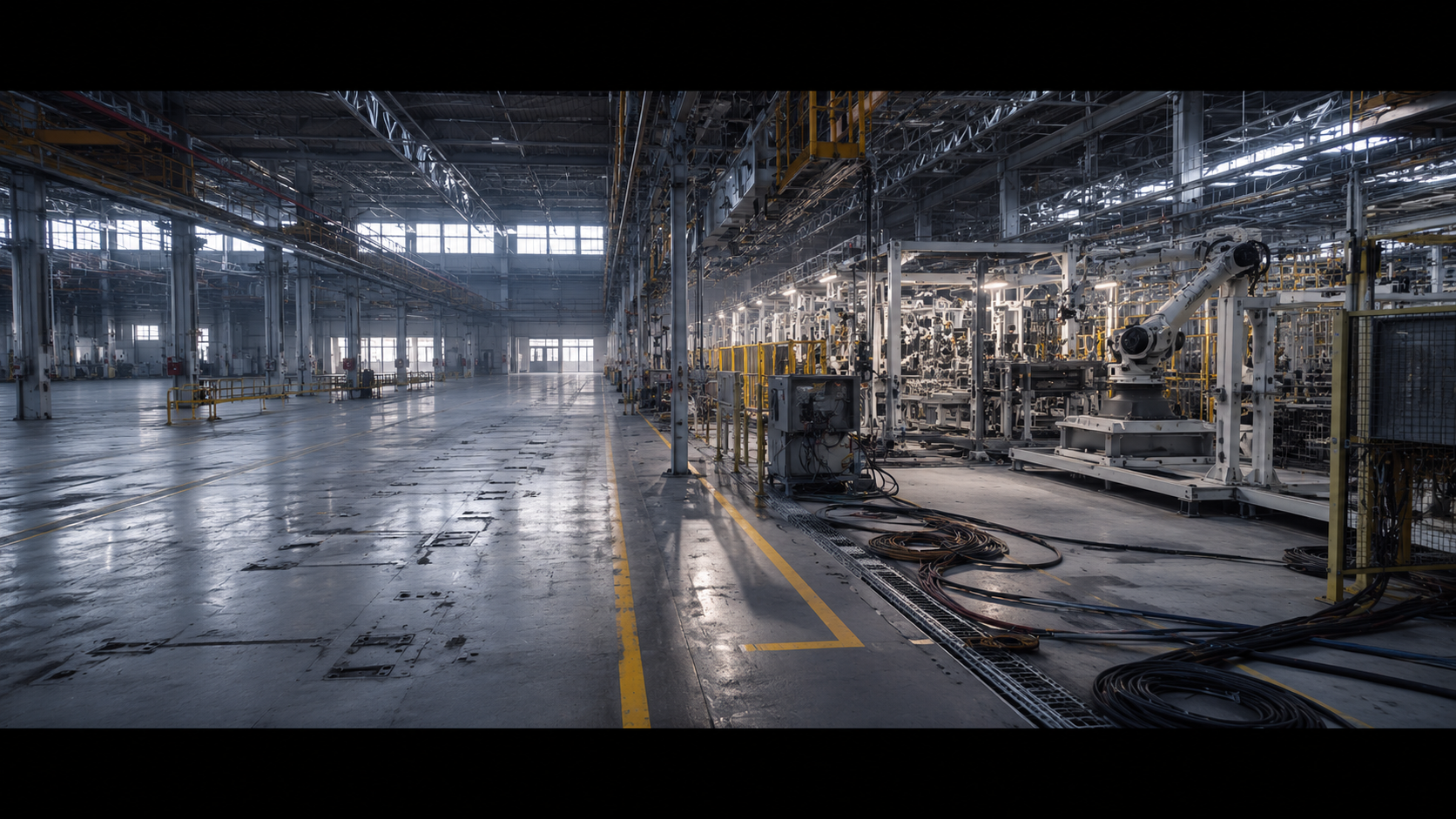
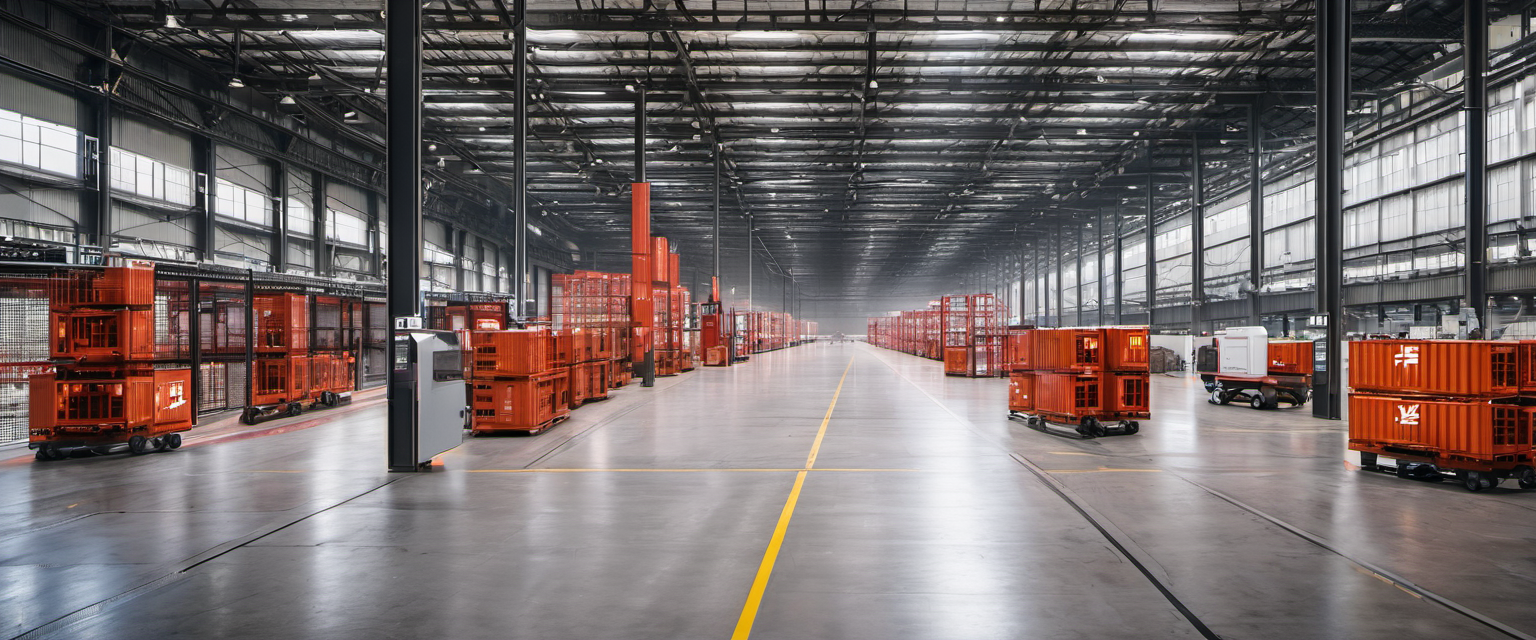
Robotera disclosed two operating numbers in the announcement that are the real news: humanoid robots are now operating in more than 10 logistics centers through partnerships with China Post and SF Group, and the company began thousand-unit deliveries in Q2 2026, with reported growth exceeding 300% during the period.
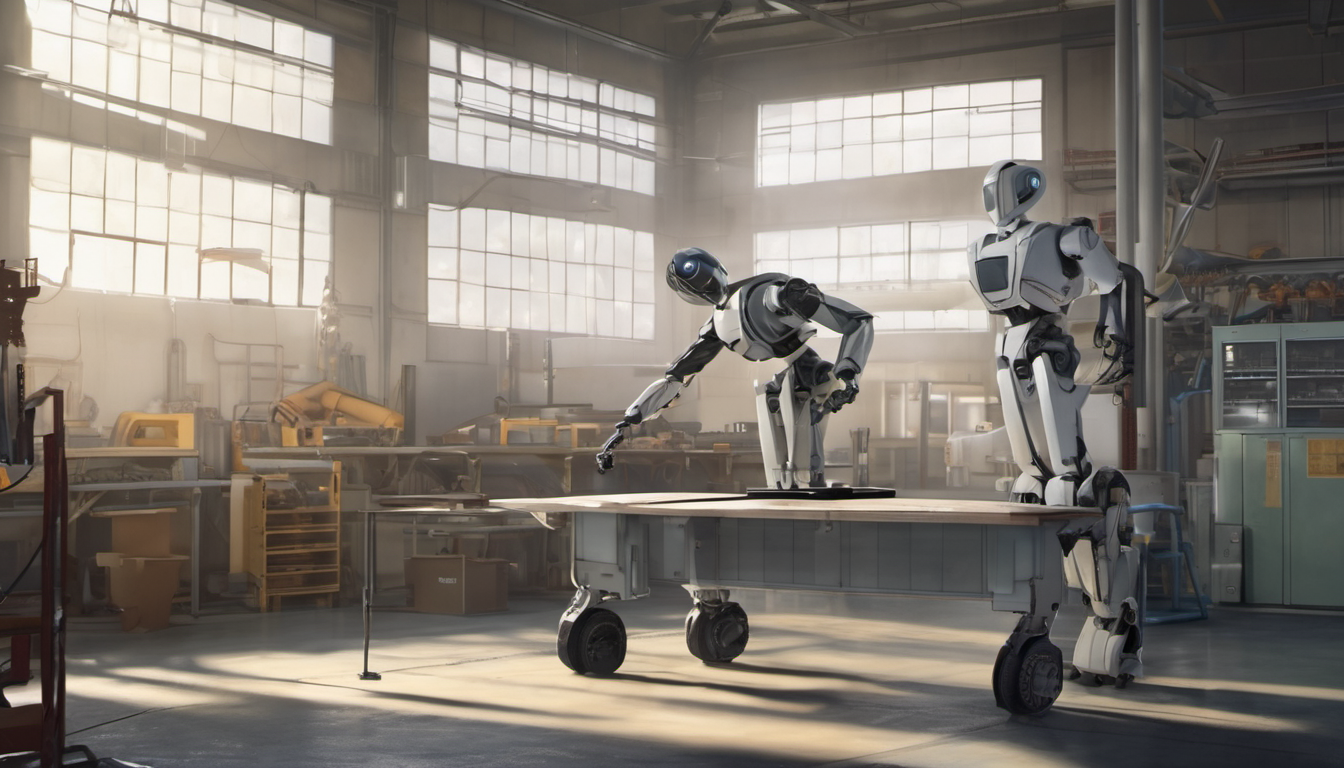
Read those two facts together. China’s two largest parcel networks — one state-owned (China Post), one private (SF) — are not running pilots in the demo sense, where a single humanoid carries a single package across a single warehouse for the camera. They’re running deployments, plural, at the unit-economics-stress-testing level. Each warehouse has a fleet. Each fleet is doing real work — bin-picking, parcel sorting, label scanning, last-meter loading — under SF’s actual SLAs.
That puts Robotera into a small category of Chinese humanoid makers that have moved past the “we shipped 100 units to friendly customers for marketing photos” stage. Until early 2026, only Unitree and AGIBOT were credibly past that line. Robotera is now the third, and arguably the first that has done it inside the services economy rather than the manufacturing economy — every other Chinese humanoid scale story has been an automotive-line or 3C-electronics-line story. Robotera’s scale story is parcels.
That distinction matters more than the dollar figure on the round.
Why parcels, specifically
The 3PL/last-mile-fulfillment use case is the most demanding deployment context in humanoid robotics that is not a moving vehicle:
- Object diversity is unbounded. A SF sorting hub sees roughly 80,000 SKU shapes in a typical month. A factory line sees three. The grasping problem at SF is a real grasping problem, not the pick-from-a-bin demo problem that most humanoid makers run for investor visits.
- Throughput is auditable. Every parcel has a barcode and a timestamp. Every robot’s cycle time is computable to the second. SF and China Post have decades of human-operator throughput baselines to compare the robots against. There is nowhere for a marketing number to hide.
- Failure cost is bounded. A misplaced parcel is a mis-route, not a totaled car. The economic blast radius of a bad robot is small enough that the customer can run the pilot at meaningful scale without taking on a tail risk.
- The labor pool is genuinely shrinking. Chinese parcel-hub night-shift turnover sits at roughly 35–45% annually depending on city. The humanoid pitch — “a unit that doesn’t quit, doesn’t unionize, doesn’t go home for Spring Festival” — is the bluntest fit-to-pain in any logistics sub-segment.
These four properties make parcels the cleanest commercial proving ground for a Chinese humanoid program. SF’s $200M-led check is, in the end, a check from the customer to lock in supply. China Post’s industrial-fund participation is the same thing wearing a different jacket.
Robotera’s twelve-month curve
The spacing of the rounds tells you the pace. In March 2026, Robotera raised RMB 1 billion (~USD $143M) in a strategic financing at roughly USD $1.5B post-money, as we covered briefly at the time in our China-humanoid recap. Eight weeks later, they raised more than USD $200M on top, with a customer-led syndicate and industrial co-investors stacking around the lead.
That’s two rounds in two months, with the second round larger and the second syndicate operating-customer-heavy. The implication is not that Robotera ran out of cash from the March round. The implication is that SF, after seeing the Q2 deployment numbers, wanted exclusivity-by-cap-table — to lock the next thousand units of supply against competing logistics buyers. The KENGIC participation does the same thing for warehouse-automation OEMs.
When customers show up in a Series B+, especially a few weeks after a strategic round, what they are buying is not “a small piece of equity.” What they are buying is call options on next year’s production allocation. Robotera’s 2027 capacity is now substantially pre-spoken-for.
The contrast with the May 7 Morgan Stanley note
The timing of the Robotera round one day after Morgan Stanley’s China humanoid survey landed is too neat to ignore. Morgan Stanley reported 150+ Chinese humanoid vendors, only 23% buyer satisfaction, and a ¥200,000 (~$28K) price ceiling for mass adoption. The note’s bear case was: most of these companies are about to die, and a 2026–2027 vendor shake-out is coming.
The Robotera round is the bull side of the same observation. If 150 vendors collapse to 10 by 2027, the survivors are the ones with named customers, repeat orders, and unit-economics evidence. SF and China Post buying into Robotera at $200M+ is one of the few datapoints we have showing what “survivor” looks like in advance. It looks like: the customer puts equity in the supplier alongside the purchase order. It looks like: the supplier hits a thousand units in a quarter. It looks like: the cap table has a state-affiliated industrial fund and a private logistics giant on the same line.
The 23% buyer satisfaction figure from Morgan Stanley is real. It is just measuring the long tail of vendors that are not Robotera, not Unitree, not AGIBOT.
The American counter-pattern, and what it suggests
If you put Robotera’s announcement next to the recent American humanoid scale stories — 1X starting NEO production at Hayward at 100K-by-2027, Boston Dynamics committing all 2026 Atlas units to Hyundai, Figure 03 going 24/7 autonomous at BMW Spartanburg — a pattern shows up.
The American humanoid scale story is dominated by automotive customers: Hyundai, BMW, Toyota (Agility). The Chinese humanoid scale story is now dominated by logistics customers: SF, China Post, plus the JD/Cainiao programs that haven’t surfaced as named partnerships yet. That asymmetry is the most interesting feature of the 2026 humanoid map. The auto industry has the capital intensity, the structured workflow, and the cycle-time discipline to absorb humanoids fastest in the West. The logistics industry has the labor shortage, the unstructured workflow diversity, and the volume to absorb humanoids fastest in China.
If those two paths produce different humanoid form factors and different unit economics over the next 18 months, the global humanoid market is going to bifurcate, not converge. American humanoids will be optimized for assembly-line tact-time. Chinese humanoids will be optimized for SKU-diversity bin-picking. Whichever specialization scales first will set the global cost curve for the other.
What to watch through Q4
- Whether the thousand-unit Q2 number holds in Q3. A thousand units is a milestone. Two thousand in Q3 is a curve. If Q3 is also ~1,000, Robotera plateaued and SF is back-stop demand rather than pull demand.
- The KENGIC partnership. KENGIC is one of the largest Chinese intralogistics OEMs. If KENGIC moves Robotera units into customer warehouses outside the SF/China Post footprint — pharmaceutical 3PL, e-commerce mid-tier, cross-border — that’s the platform-vs.-captive moment.
- Pricing into 2027. Morgan Stanley’s ¥200,000 price ceiling for mass adoption is the wall every Chinese humanoid vendor will measure itself against. Robotera’s current ASP is reportedly higher; the bull case requires the price to come down toward that ceiling without margins collapsing.
- The SF exclusivity clause. Customer-led rounds sometimes come with quiet exclusivity terms. If Robotera’s 2027 capacity is contractually locked to SF + China Post, the upside is a guaranteed top line and a capped TAM.
- Whether the rest of Morgan Stanley’s 150-vendor list starts disappearing. The Robotera round implicitly raises the bar — Series B humanoid investors in China now have a “customer-on-the-cap-table” comp. Vendors without that profile are going to find the next round much harder.
The dryly funny coda
The May 8 press release leads with the dollar figure and the venture-investor list. The actual story is in the second-to-last paragraph, where it mentions in passing that the company “began thousand-unit deliveries” in Q2.
That sentence is the entire round. SF didn’t write a $200M-anchored check because they liked the founder’s TED Talk. They wrote it because the units already in their warehouses worked well enough that they wanted to lock in the next ten thousand of them before anyone else got the option.
The market is moving from “cool video, please send investor deck” to “we’d like 800 more, please.” Robotera is the first Chinese humanoid company to credibly cross that line in a service-economy use case rather than a factory-line one.
If 1X is the American consumer humanoid bet and Atlas is the American automotive humanoid bet, Robotera just became the Chinese logistics-economy humanoid bet. The dollar figure on May 8 is the smaller half of that statement.