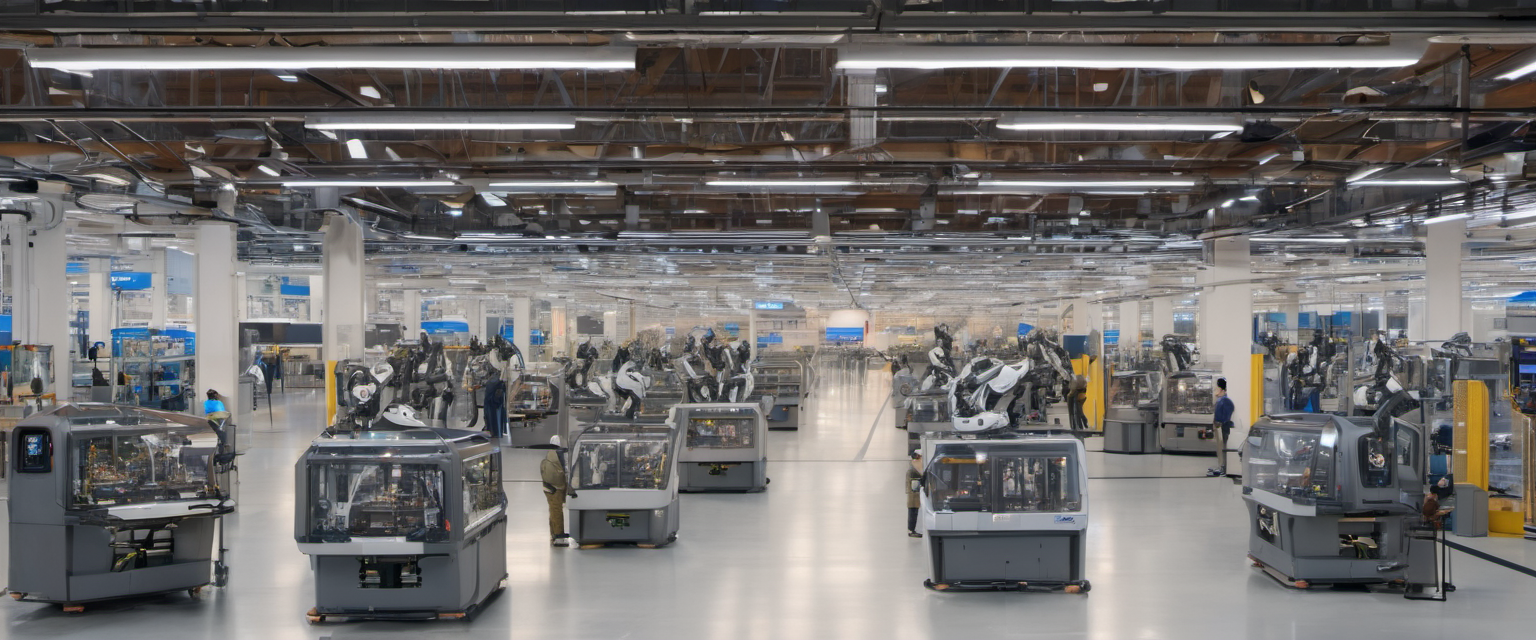
On April 30, 2026, 1X Technologies announced full-scale production at its 58,000-square-foot NEO factory in Hayward, California. Year-one capacity: 10,000 humanoids. Cumulative target: 100,000 units by end of 2027. The vertical-integration list — motors, batteries, sensors, structures, transmissions, soft outer covers — is the first of its kind in US humanoid manufacturing.
The numbers worth holding next to that announcement: 1X opened pre-orders on October 28, 2025, and sold out the entire first-year capacity in five days. Price: $20,000 outright or $499 per month on subscription. The product is NEO — a general-purpose home humanoid pitched at consumers, not a BMW-floor industrial unit, not an Amazon-warehouse Digit, but an actual robot you put in your house alongside the Roomba.
The shipping schedule starts now. The order book runs to year-end 2027.
This is a different kind of milestone than the Tesla Fremont Optimus pivot, the AGIBOT G2 Longcheer livestream, or the Beijing-marathon Unitree race. All of those were demos, internal deployments, or B2B pilots with corporate buyers. 1X NEO is the first humanoid I am aware of going to actual residential consumers at production volume in the US.
What $20,000 buys you in 2026
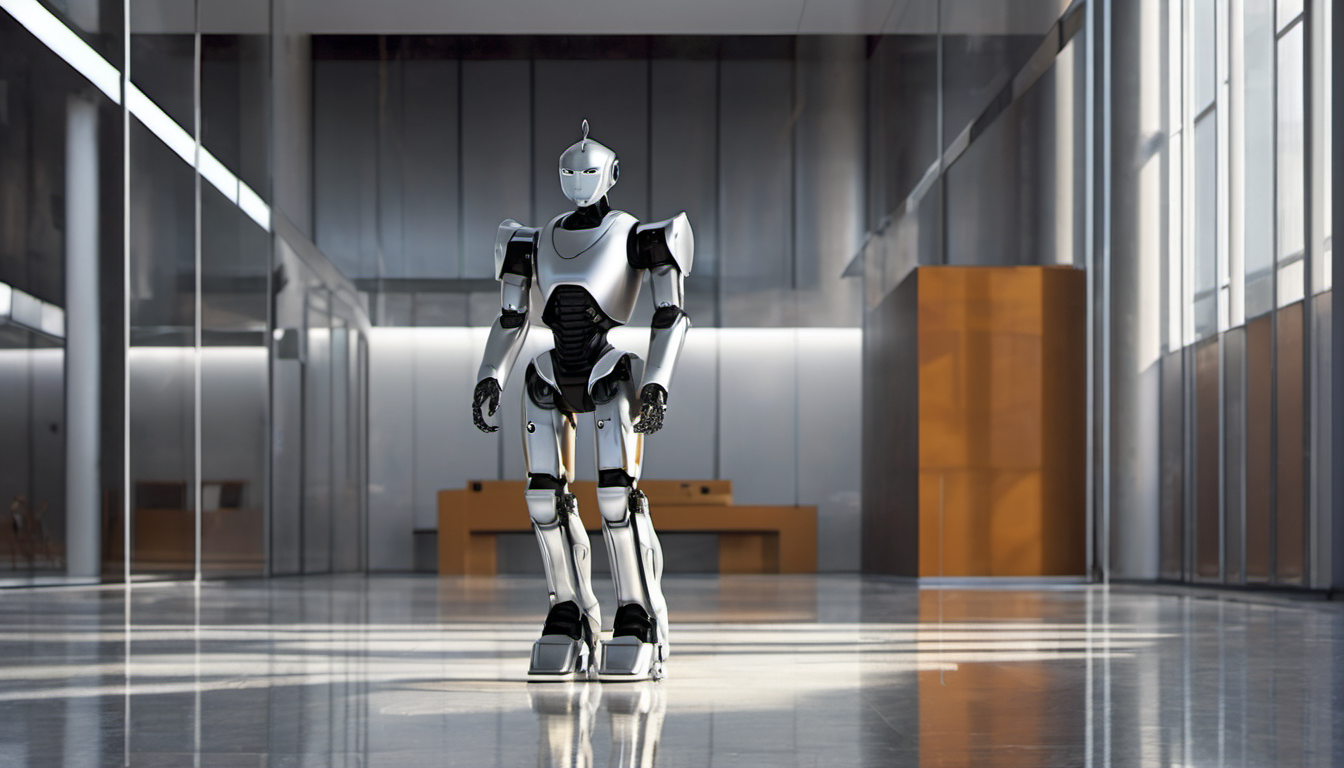
NEO is a roughly five-and-a-half-foot bipedal humanoid with soft-cover-clad arms (the soft body is intentional — the official line is “designed to be safe around humans,” the engineering reading is that 1X wanted to clear consumer-product safety certifications without the headache a hard-shelled humanoid would have triggered). The positioning is general home tasks: tidying, fetching, light surface cleaning, basic loading and unloading.
The cost stack: $20,000 outright, or $499 per month with a long-term commitment. Three colorways — Tan, Gray, Dark Brown. Pre-launch demo videos showed teleoperation as a fallback when on-board autonomy fails — meaning some unspecified fraction of “what your robot does” is actually a human pilot in another country watching through the robot’s camera and driving for short stretches. 1X has been more honest than most competitors about this teleop-assisted-autonomy framing, but the disclosure is in the TOS, not the marketing.
The customer cohort for the first 10,000 units is roughly: tech-adjacent early adopters, well-off retirees with mobility constraints, content creators, and a stratum of high-net-worth households who will buy the robot for the same reason they bought the early Tesla Roadster and the early HoloLens. Not because it does the work. Because it indicates one is paying attention.
The math at the consumer end of humanoids is different
Big Tech robotics — Optimus, Apollo, Digit, Figure 02 — has been built around B2B economics: a robot at $X performs $Y of labor for Z hours per day, payback period is X / (Y × Z × 365). The math has been close at warehouse and automotive cycle times, far off at residential cycle times.
NEO at $20,000 is not really being sold on payback economics. It is being sold on consumer-electronics economics: a luxury good that signals technological status, with a hobbyist-grade utility floor. The 10,000 first-year buyers did not run a payback calc. They ran a “what is the highest-status object I can plug into my living room in 2026” calc, and NEO at $20K won the shelf.
This is fine. It is also how most consumer-electronics categories started — the Apple I, the original Tesla Roadster, the Oculus DK1, the HoloLens. The category begins with status-driven first-buyers and earns its way into utility over the first three to five product generations. NEO is gen-1 hardware. The reliability data does not exist yet.
What the OpenAI relationship actually means
1X is OpenAI-backed. The relationship gets oversold in coverage — NEO does not run an OpenAI model on-device; the on-robot stack is 1X’s own learned manipulation policies. What OpenAI brings is capital, branding, and a cloud LLM hookup for natural-language task issuance and conversational interaction.
The structural read is more interesting than the marketing. OpenAI is positioning across the embodied-AI stack — investing in humanoid hardware (1X), in robotics-data partnerships (the parallel Meta-buys-Ari deal is the same pattern played the other direction), and in the data-collection pipeline that humanoids will feed back into foundation-model post-training. 10,000 NEO units in American homes are, among other things, a residential robotics-data collection fleet for OpenAI’s next-generation embodied-AI models.
The privacy and consent disclosures around that data flow are visible in the 1X TOS but not loud in the marketing. This is roughly where automotive ADAS data collection was in 2017. The category will spend its first three years arguing about the boundary.
What to watch over the next 12 months
- First-shipment reliability. The first 1,000 customer ships will reveal whether 1X’s vertical integration translates into mean-time-between-failure that meets a consumer-grade expectation. A humanoid that bricks weekly will become a viral content category very fast.
- The teleop-disclosure debate. When the first viral “my robot just collapsed in my kitchen because the human pilot disconnected” video lands, the autonomy-vs-teleop framing becomes a regulatory issue. NEO is the first humanoid at consumer scale where this question matters.
- The Tesla-Optimus consumer announcement. Optimus has been B2B-only. If Tesla announces a sub-$20K consumer Optimus to compete with NEO, the price floor in the category resets fast and 1X’s $20K margin collapses with it.
- The 100,000-unit San Carlos buildout. Hayward caps at 10,000 per year. The second factory in San Carlos is the path to the 100K-by-end-of-2027 number. If construction slips, the order book starts backing up against the manufacturing constraint and pre-order refunds become a real risk.
The dry coda
The first 10,000 American humanoid-buying households were assembled in five days last October. The factory that builds their robots came online April 30, 2026. The robots ship now.
The interesting question is not whether NEO works as advertised — it almost certainly does not, on launch day, at the level the marketing implies. The interesting question is what happens to humanoid robotics when the consumer feedback loop closes. Until April 30, 2026, every humanoid was a research prototype, a B2B pilot, or a demo. From May 5 forward there is a consumer-shipping product line that will earn customer reviews, product-Twitter discourse, warranty claims, and eventually class-action attorneys.
Mass production has begun on a category that did not exist last year. The unit economics are weird, the autonomy story is partly teleop, and the first-customer cohort is mostly status buyers. None of that has stopped a single consumer-electronics category in the last fifty years from earning its way into utility over the next decade.
It will not stop this one either.