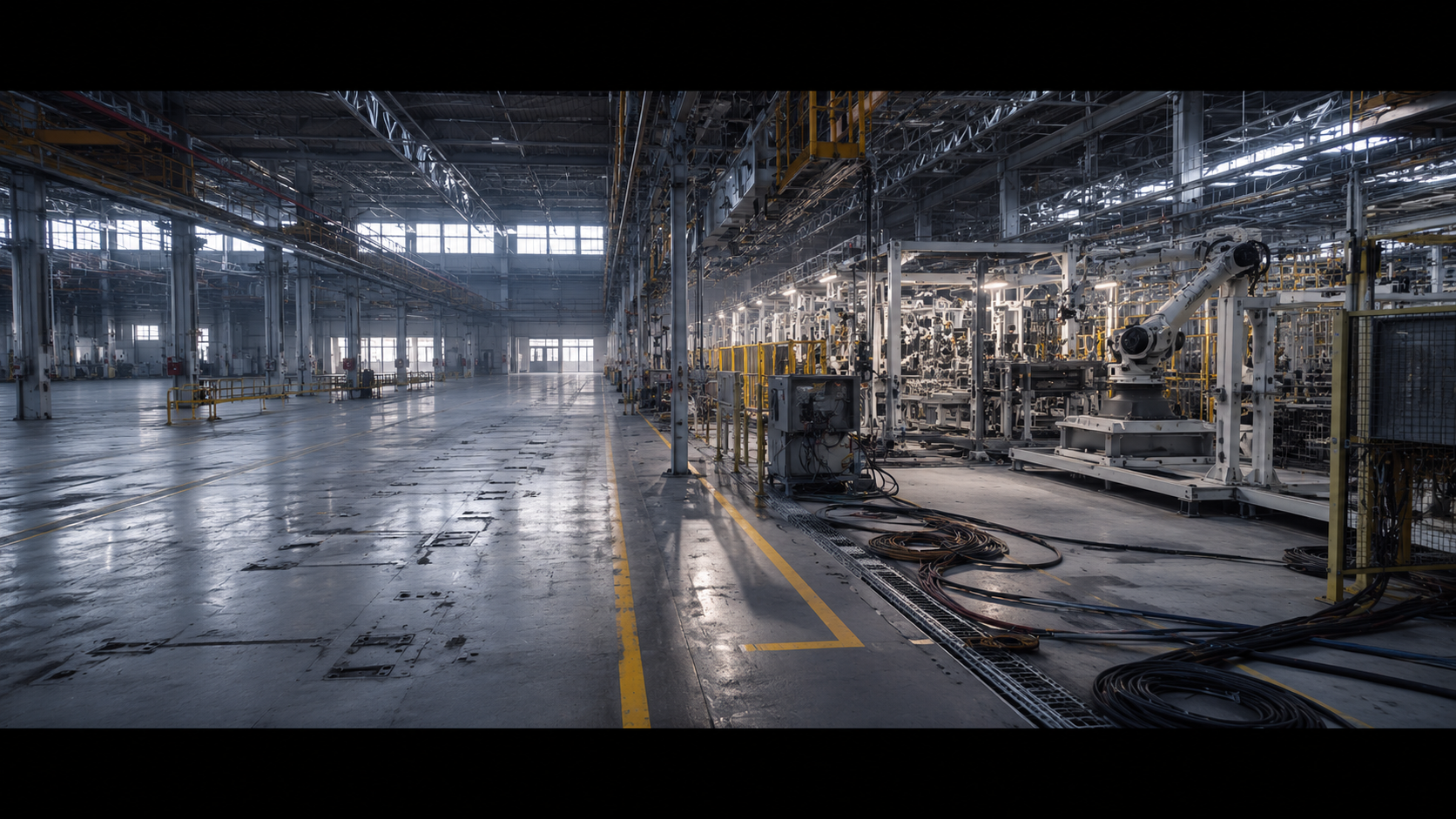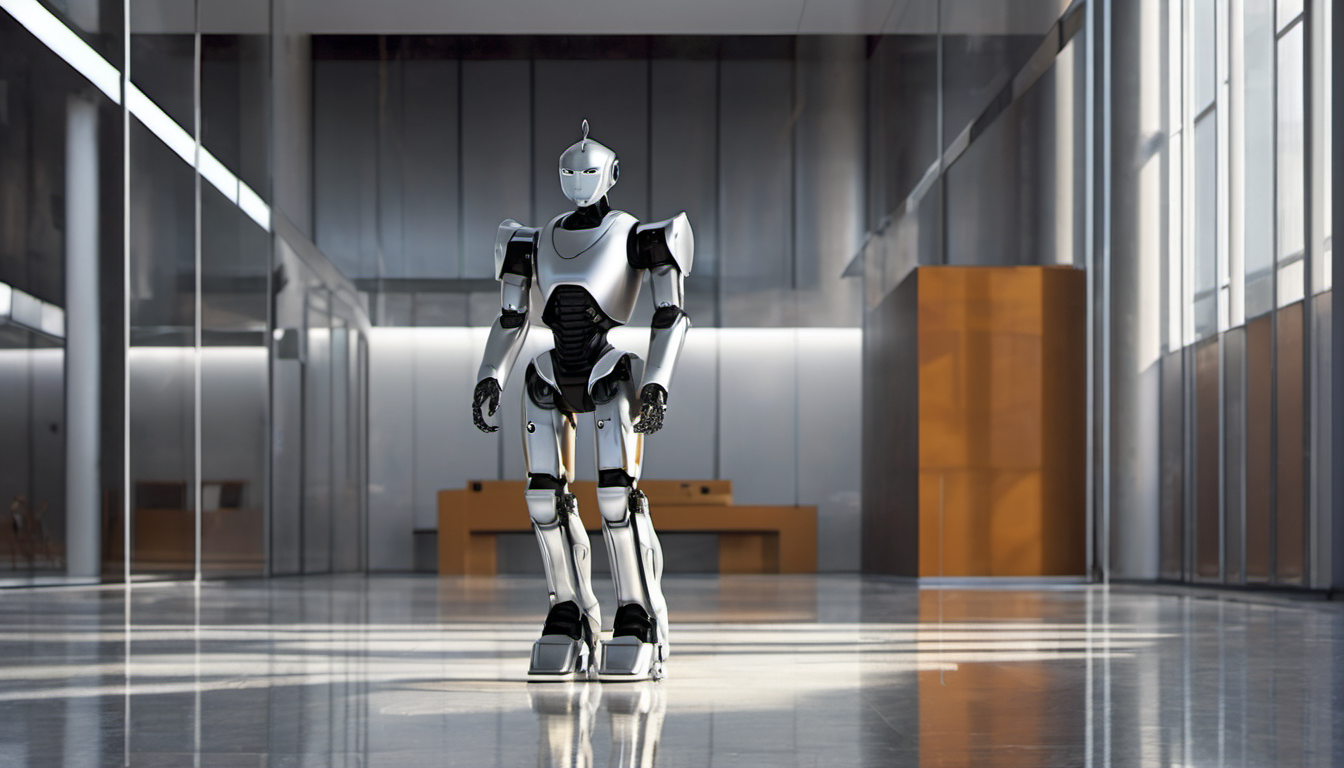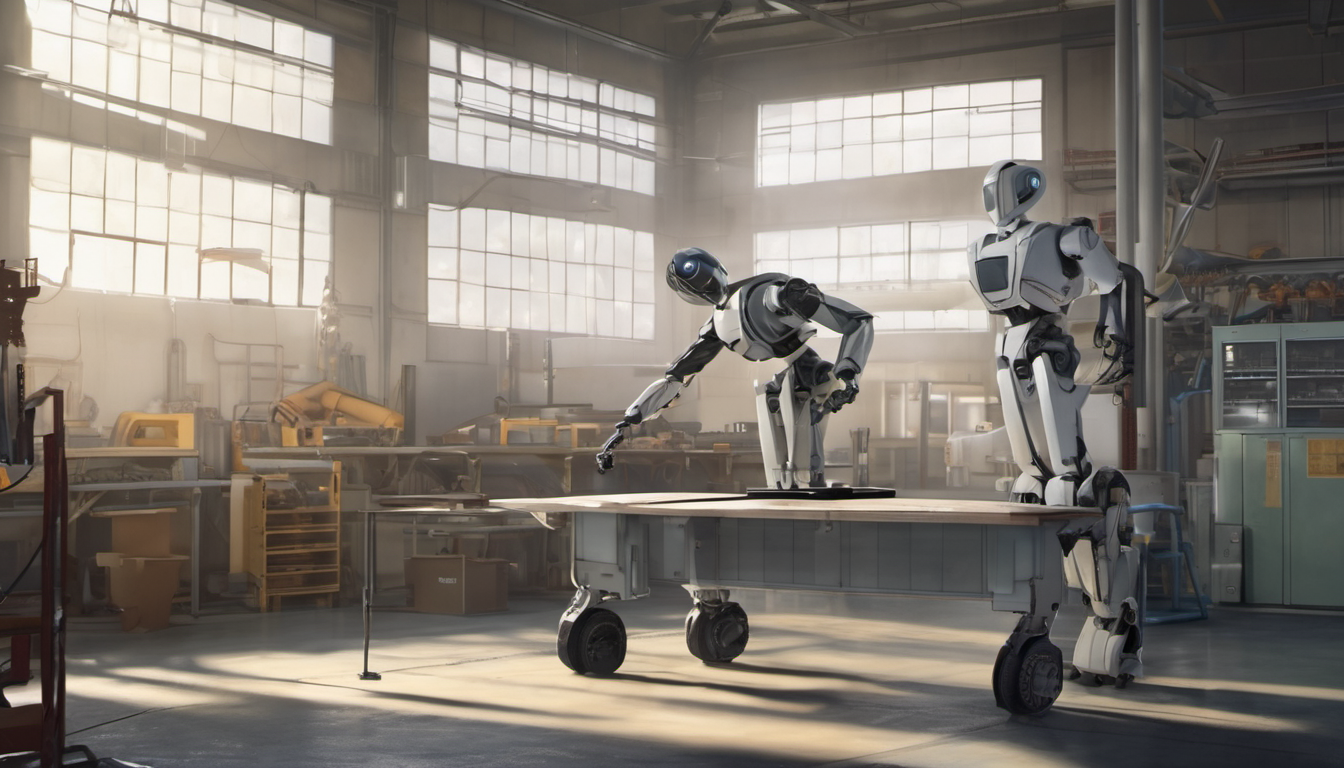
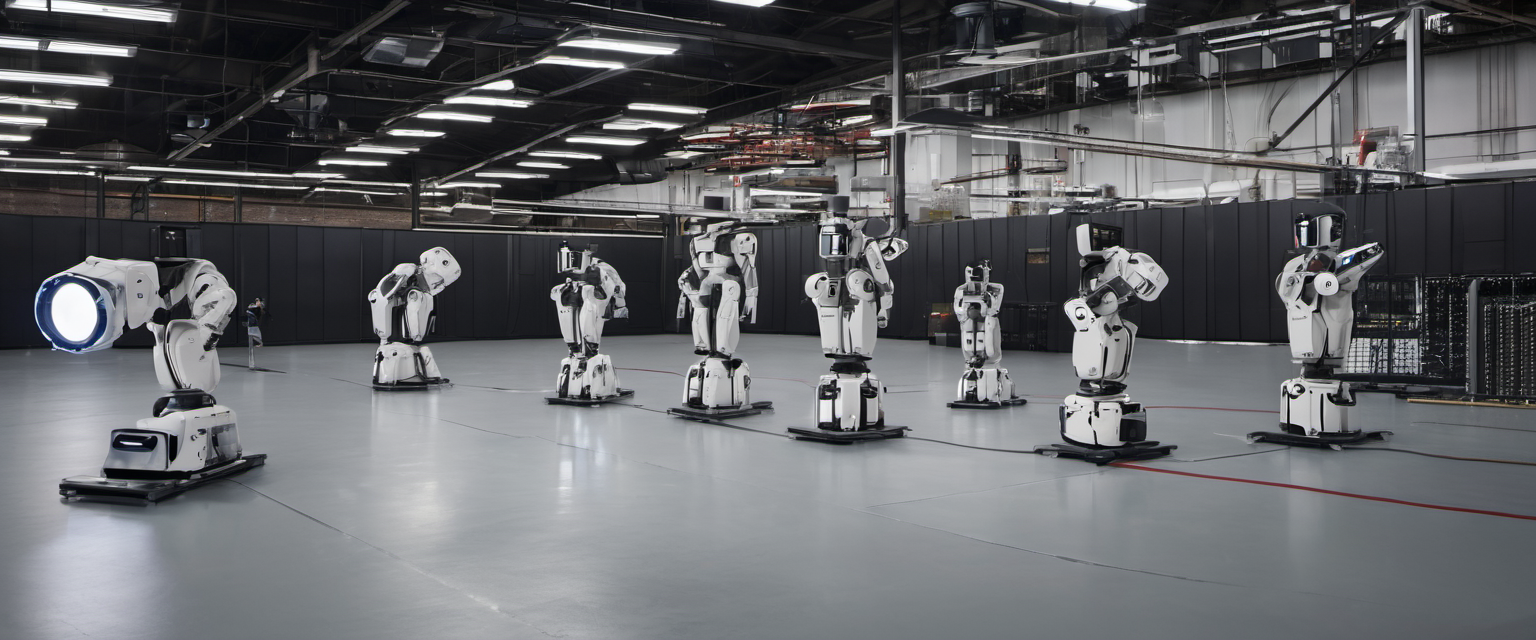
Boston Dynamics uploaded a 47-second video to YouTube on Wednesday, May 6. The Atlas robot in the clip walks into frame, plants its hands on the mat, kicks into a clean handstand, then transitions into an L-sit — both legs extended forward parallel to the floor, the entire weight of the machine balanced on its hands. It holds the position for roughly five seconds. Then it kips back to standing.
The robotics-press headlines went on the gymnastics. The body-of-news read is buried 30 seconds into the clip and on the front of the robot’s chest plate: the serial number reads “001.”
That number is what is actually new.
What “001” means versus the orange research mule
The Atlas the public has watched do parkour, backflips, and tool-handling demos for the past three years is the orange research model — the hydraulic and now electric R&D platform Boston Dynamics has used to push the controls research. That robot has never been for sale. It is a moving testbed.
The Atlas in the May 6 video is a different machine. Bloomberg’s report identifies it as the development build of the production model, the matte black-and-white version Boston Dynamics first showed at CES 2026. The “001” on the torso is Boston Dynamics labeling this unit as serial number one of the production line.
That is the news. Not the handstand. The handstand is a control-systems demo most humans cannot do. It runs on the same Gemini Robotics-derived stack that has been public since the January CES reveal. The shape and the matte production casing — that is what is new in the world. Production-build unit one, in motion, in public.
Hyundai’s serial-number countdown is now visible
Hyundai bought Boston Dynamics in 2021. Since then the public messaging from Boston Dynamics has been about capability demos. The public messaging from Hyundai has been about a 30,000-units-per-year robotics factory in Georgia, part of a $26 billion U.S. capex commitment, with first factory deployments slated for 2028 at the Hyundai Motor Group Metaplant America in Savannah, Georgia.
The May 6 video is the first time those two messaging streams have collided publicly. A serial-numbered unit. Not a one-off. Not a hand-built demo. Unit one of a production line that, on Hyundai’s own public number, is targeting 30,000 units per year.
The Korea Herald’s read of the demo is the cleanest framing seen so far: Atlas “showcases balance and joint control beyond human skeletal limits.” The Boston Globe takes the same line — the L-sit is biomechanically impossible for humans. The point of the move is not that Atlas can do gymnastics. The point is that Atlas is built without the joint constraints that limit human factory workers, which means the workspace optimization in a Hyundai assembly line stops being constrained by human reach envelopes.
Why this matters for the 2028 deployment math
Hyundai is the most concrete humanoid customer of any automaker. BMW has its Spartanburg pilot. Toyota has seven Digit units at its Woodstock plant. Mercedes has Apptronik. None of those automakers has committed to “tens of thousands” of robots. Hyundai has, and the Boston Dynamics ownership means Hyundai effectively underwrites the demand side and the supply side of its own humanoid program.
The 2028 deployment date is Hyundai’s stated target for “real-world operations” — parts sequencing at the Savannah plant, then progressive expansion. Working backward from 2028, the production-line ramp has to start at scale by mid-2027. Working backward further, unit 001 needs to be doing exactly what it just did on May 6: being demonstrated as a production-grade, repeatable, controls-stable platform.
That is the point of releasing the video on May 6 — 18 months ahead of the production ramp date. It puts the supply chain on notice. Hyundai Mobis is already committed to actuator supply. Component suppliers reading the May 6 footage now have a concrete picture of the form factor they need to build for. That is what a “production-ready” reveal does — it pulls the supplier base into commitment ahead of the ramp.
Comparison: what 001 means against the rest of the field
The serial-numbered production reveal is now the public benchmark every other humanoid program is measured against.
Tesla Optimus at Fremont is in the middle of its Model S/X line conversion, with production slated for late summer 2026. Musk admitted on the Q1 2026 call that Optimus is “still very much in the R&D phase” — a candid framing, but it puts Optimus six to nine months behind a serial-numbered Atlas.
Figure AI is pre-production with Figure 03 at BMW Spartanburg, 1,250 hours and 90,000 parts moved, with BotQ tooled for 12,000 units a year. Figure has not yet shown a serial-numbered production unit publicly. The 12k-per-year capacity figure is a ceiling, not a current run-rate.
1X NEO opened the Hayward factory on April 30, with 10k/year capacity targeted and 100k by 2027. NEO is a consumer-targeted humanoid; the form factor question is different from Atlas’s industrial use case. Not comparable on production-readiness, but worth flagging because the calendar is the same.
Unitree, Agibot, UBTech — the Chinese cohort — are shipping in volume already, but the cohort runs the spectrum from quadruped chassis (Unitree) to industrial humanoids (Agibot, UBTech). UBTech has BYD, Geely, FAW-Volkswagen, BAIC, and Foxconn deployments. Agibot has the State Grid 8,500-unit deal. The May 6 Atlas serial reveal is Boston Dynamics catching up on the public-readiness signal that the Chinese cohort has been emitting for six months.
What the May 6 video does NOT show
What the video carefully avoids is anything that looks like factory work. No tote handling. No parts sequencing. No tool use. No pick-and-place. The handstand-to-L-sit is a controls and balance proof point, not a productive-task proof point.
That is the gap to watch. Figure 03 at BMW has been releasing footage of actual production tasks — moving 90,000 parts during the Spartanburg pilot. Agility Digit at Toyota Canada does line-feeding and tote loading. The May 6 Atlas video shows the robot is a balanced, articulated platform; it does not show that it can do industrial work.
Boston Dynamics has been making roughly four Atlas robots per month, per the Register’s January report. The 30,000-per-year capacity at the Georgia factory is the ceiling, not the current build rate. The production-readiness signal the May 6 video sends is: the platform is ready. The application-readiness signal — does Atlas do useful factory work in a Hyundai context — is the next demo Boston Dynamics has to ship, probably in the second half of 2026.
What to watch through Q4
- Atlas 002 and forward. If Boston Dynamics releases footage of unit 002 doing work, not gymnastics, that is the real production-readiness signal. Watch for industrial-task footage by the August automotive supplier conferences.
- Hyundai Mobis actuator commit. The supplier is the bottleneck on humanoid manufacturing scale. Mobis’s Q2 capex disclosure should reveal whether the actuator factory tooling is on schedule for the 30k-per-year ramp.
- The Google DeepMind half of the 2026 deliveries. The other recipient of 2026 Atlas units is DeepMind. What DeepMind does with Atlas — research, an embodied agent product, an internal tool — has not been disclosed. The first published DeepMind paper that uses Atlas data is the signal worth watching.
- The Tesla Optimus Q3 print. Tesla’s August call will have Optimus production-line status. If Tesla shows a serial-numbered Optimus Gen 3 unit in motion in similar fashion to the May 6 Atlas video, the field tightens. If not, the public gap between Atlas-001 and Optimus widens further.
The dry coda
The handstand is the headline. The serial number is the news. Atlas-001 is a labeled inventory item now, not a research mule, and the labeling is what anchors the 2028 Hyundai deployment date in something more concrete than a press release.
Boston Dynamics has spent fifteen years releasing demo videos. The pattern in those videos has always been: novel capability, no commercial commitment, no schedule. The May 6 video breaks that pattern. The capability is not even particularly novel — Atlas has done parkour and backflips. What is novel is the chest plate.
Atlas-001 is the unit Hyundai will deploy at scale at Savannah in 2028 if the next eighteen months of supplier ramp and software validation hold. The handstand is the cover story. The serial number is the load-bearing one.
001 is a small number. The next one is 002.