
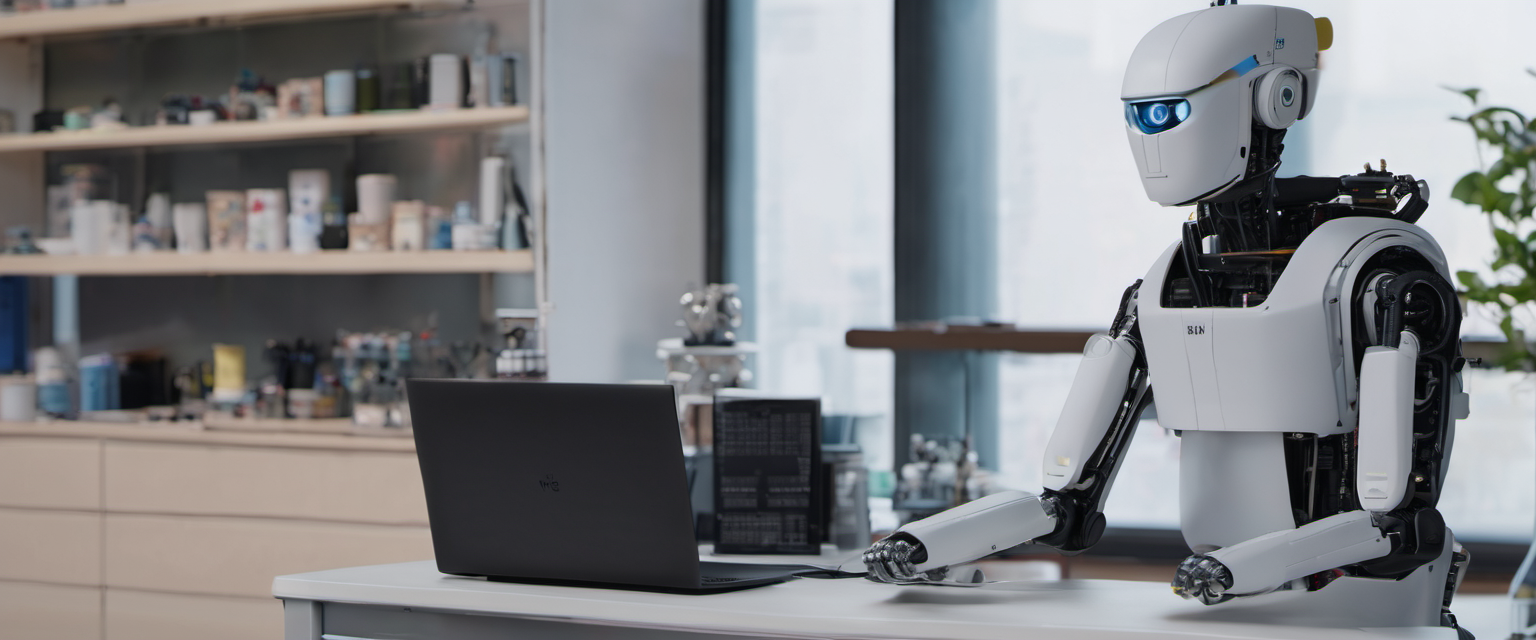
The Korean humanoid story has been getting drowned out by the Chinese and U.S. mega-rounds. WIRobotics’s May 14 Series B announcement is small by 2026 humanoid-round standards — KRW 95B, roughly $68M — but it is structurally one of the cleanest cap-table reads of the spring. JB Investment led, joined by InterVest, Hana Ventures, Smilegate Investment, SBVA, NH Investment & Securities, Company K Partners, GU Investment, and FuturePlay. Every Series A investor returned. AWS and NVIDIA are already partners on the tech side. And — this is the interesting part — the company shipped 3,000+ units of a wearable walking-assist robot called WIM before it ever raised this round.
The lede: WIRobotics is the first humanoid Series B in 2026 where the bridge between rounds was paid for in revenue from a working wearable product, not in valuation step-ups. Everyone else in the cohort is selling a prototype. WIRobotics is selling 3,000 of them already.
The revenue ramp is the unlock
Per the official PRNewswire release, WIRobotics’s revenue trajectory has been:
- 2023: KRW 560M (~$400K)
- 2024: KRW 1.3B (~$930K) — 2.3× year-over-year
- 2025: KRW 2.79B (~$2M) — 2.1× year-over-year
- Q1 2026 alone: already exceeds full-year 2024 revenue.
That trajectory is small in absolute dollars but the shape is what matters: a hard-tech wearable robotics business growing 2× year-over-year through 2025 and stepping up in 2026 — and the company is using that as the financing argument to bridge into a humanoid platform called ALLEX that targets a research-grade ship by late 2026 and mass-production readiness in late 2027.
The contrast with the rest of the May-2026 humanoid funding cohort is the part nobody else is doing. Compare:
| Company | May-2026 round | Pre-round commercial revenue | Pre-round units shipped |
|---|---|---|---|
| Mind Robotics | $400M Series B at $3.4B | $0 external (Rivian internal only) | Hundreds (all Rivian Normal) |
| Figure (March) | $1B Series E | Pilot revenue (BMW, Brookfield) | <100 deployed |
| RoboEra (May 8) | ~$200M | Pre-commercial | <100 |
| WIRobotics (May 14) | $68M Series B | KRW 5B+ trailing revenue | 3,000+ WIM units |
The WIM unit count makes WIRobotics the only humanoid-adjacent Series B raiser this year with a real installed base of paying users to point a roadmap at. Most of those users are not buying humanoids — they are buying a hip-and-thigh exoskeleton for walking assistance in rehab and elderly-mobility contexts. But the data WIM generates — gait, joint angle, load profile, fall-event telemetry across 3,000+ real-world deployments — is the input that the ALLEX humanoid platform is being trained against. That is the Physical AI framing the company uses in its own copy, and unlike most companies using that phrase in 2026, WIRobotics has the data to back it.
The Korean strategic context
WIRobotics sits in a part of the cap-table map that is structurally underweighted in U.S. coverage. The cohort it belongs to:
- Rainbow Robotics (acquired by Samsung Electronics in early 2025) — Samsung’s humanoid bet, Korean.
- Doosan Robotics — collaborative-robot company, Korean.
- Hyundai Motor / Boston Dynamics — Atlas commercial deployment, Korean ownership.
- Naver Labs — research-grade humanoid platforms, Korean.
- WIRobotics — wearable + humanoid combination, founded 2021, now post-Series B.
Korea has the second-most-concentrated humanoid R&D capability in Asia after China, and Korean strategy at the chaebol level (Samsung Rainbow acquisition, Hyundai Boston Dynamics control, LG and SK building robotics divisions) is now matched by a venture-funded layer led by WIRobotics, the RoboCare consumer side, and the new wave of post-2024 spinouts.
JB Investment leading the Series B is also notable. JB Investment is the venture arm of JB Financial Group, the Jeonbuk-based regional financial holding company. Korean regional financial groups leading a humanoid Series B is the venture-allocation signal that the country’s banking system has been told to underwrite the next manufacturing-AI cycle. That is a Strategic Industrial Policy 2024 program outcome, not a coincidence.
Why the AWS + NVIDIA partnership reads differently than the U.S. version
WIRobotics has named AWS and NVIDIA as partners in its PRNewswire release. In 2026, almost every humanoid startup names NVIDIA — the GR00T+Jetson combo is the de-facto reference stack. AWS naming is rarer; it usually signals that the company is using AWS RoboMaker / AWS DeepLens / a cloud-side gripper-policy training loop hosted on AWS.
The combination of WIM telemetry → AWS training → NVIDIA inference is the kind of plumbing that the U.S. humanoid cohort has been trying to build internally. Figure built its Helix-02 onboard inference stack from scratch. 1X built its own training pipeline. WIRobotics is using off-the-shelf hyperscaler infra and putting the differentiation in the data layer instead. That is a smaller-company bet that the data is the moat, not the inference stack — and given the unit count gap, it’s the bet WIRobotics can actually defend.
What the $68M is buying
The use-of-proceeds, per the company’s own framing:
- Research-grade ALLEX ship by end of 2026. Not a consumer product — a platform for global research institutions to run experiments on. This is the same go-to-market wedge that 1X used with EVE (the research-only predecessor to NEO) and that Unitree has used with G1 — earn academic-citation distribution before earning commercial deployment distribution.
- Mass-production readiness target: late 2027. This puts ALLEX commercial shipment behind the U.S. humanoid cohort’s stated timelines by 12–18 months. That is a deliberate sequencing choice — Korea is letting the U.S. and Chinese cohorts pay for the early-adopter pricing failures and the early-deployment lawsuit cycle, and entering the market in late 2027 when the operational playbook has been written.
- WIM commercial expansion in Europe, Japan, and Turkey. The wearable revenue continues to underwrite the humanoid R&D — and the new geography adds to the gait dataset. Turkey is the unusual entrant on that list; it suggests WIRobotics has a relationship with one of the Turkish rehabilitation-equipment distribution networks and is using it as a beachhead for EMEA expansion at a lower customer-acquisition cost than direct EU sales.
What to watch
- The first ALLEX research-customer announcement. A Korean university and a U.S. R1 (probably Stanford, CMU, or MIT) is the expected launch cohort. The U.S. R1 placement is the test of whether ALLEX gets cited in the same papers as Figure 03 and 1X NEO.
- The next round’s lead investor. A Korean conglomerate (Samsung, Hyundai, LG, SK) coming in to lead the Series C is the consolidation tell. A Sequoia or Khosla coming in is the U.S.-validation tell. JB Investment leading B and then exiting in C is the most likely outcome — regional financial groups don’t typically own all the way to commercial.
- WIM Q2 2026 revenue. Q1 already exceeded full-year 2024. If Q2 holds the 5x-YoY-trailing pace, the wearable side stops being “the thing that funds the humanoid” and starts being its own SaaS-margin story.
- The competitive response from Samsung Rainbow Robotics. Samsung’s Rainbow acquisition was the chaebol-level humanoid bet. A venture-funded competitor with a 3,000-unit wearable installed base is the kind of cap-table fact that forces Samsung to either acquire (the cheapest path), partner (the slowest), or build a competing wearable line under the Galaxy brand (the most likely).
The Korean humanoid sector just got its first venture-backed Series B with a profitable wearable revenue stream underneath it. $68M is the smallest humanoid Series B announced in May 2026 — and the only one that wasn’t underwritten by a captive corporate customer or a pure-bet pitch deck. It’s also the only one in the May-2026 cohort that already has 3,000 customers paying for a working product.