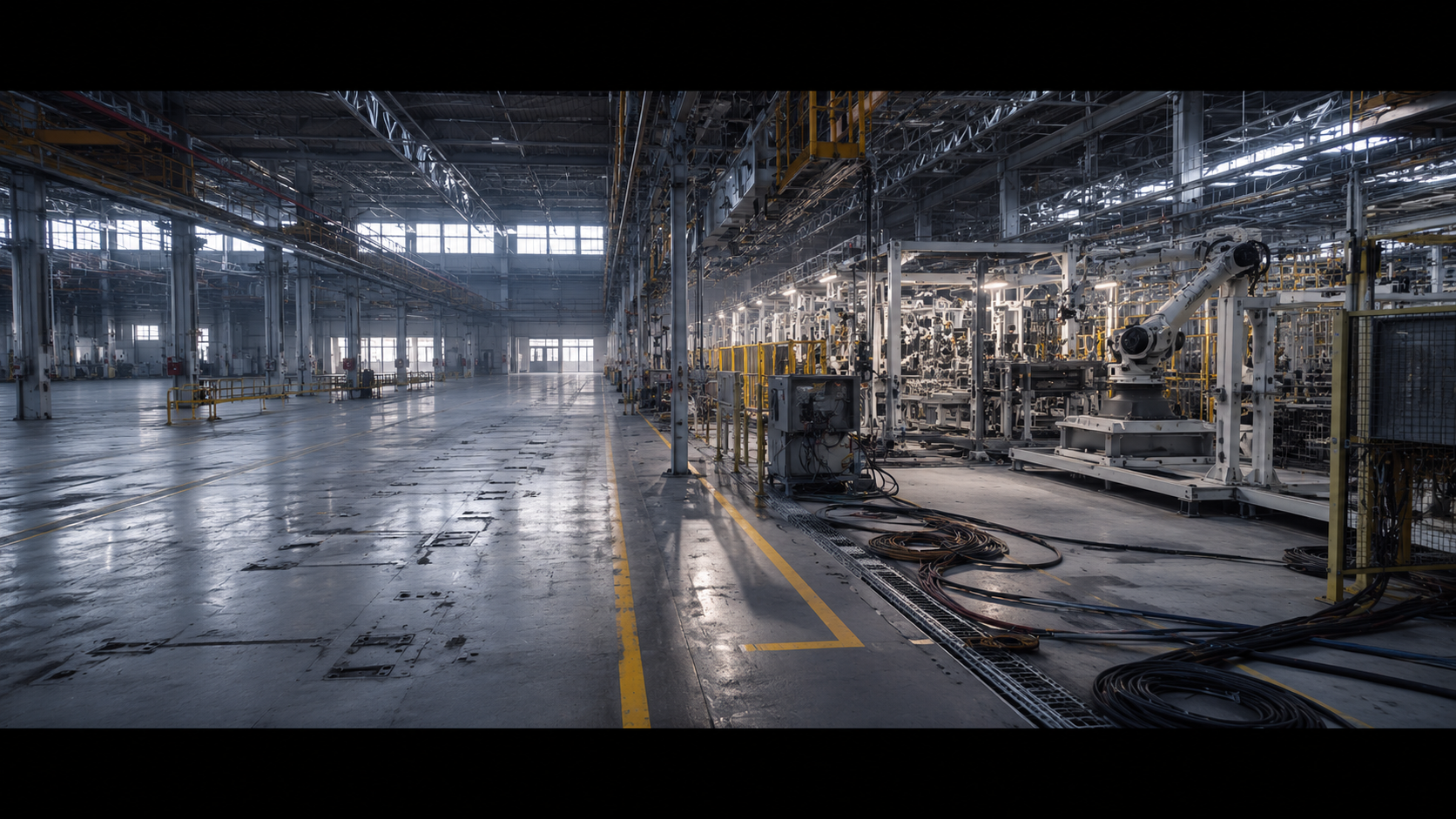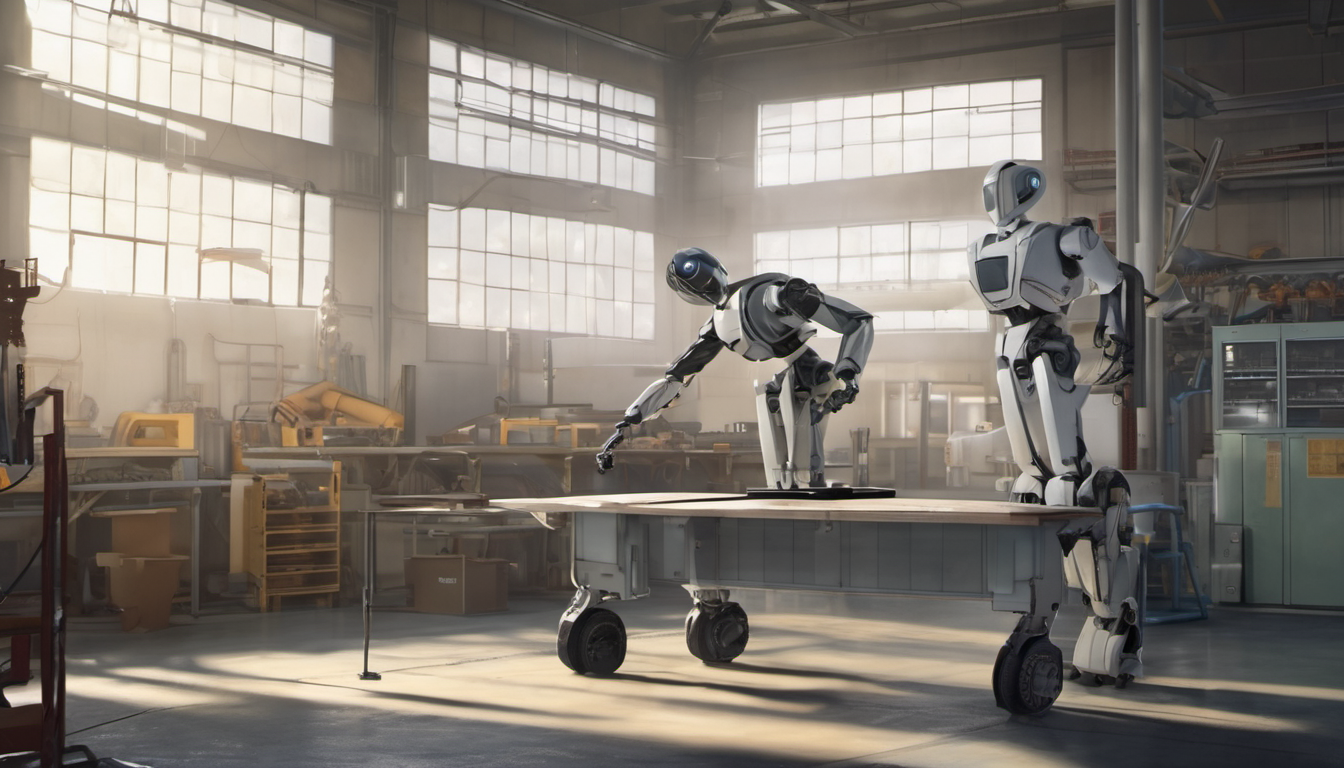
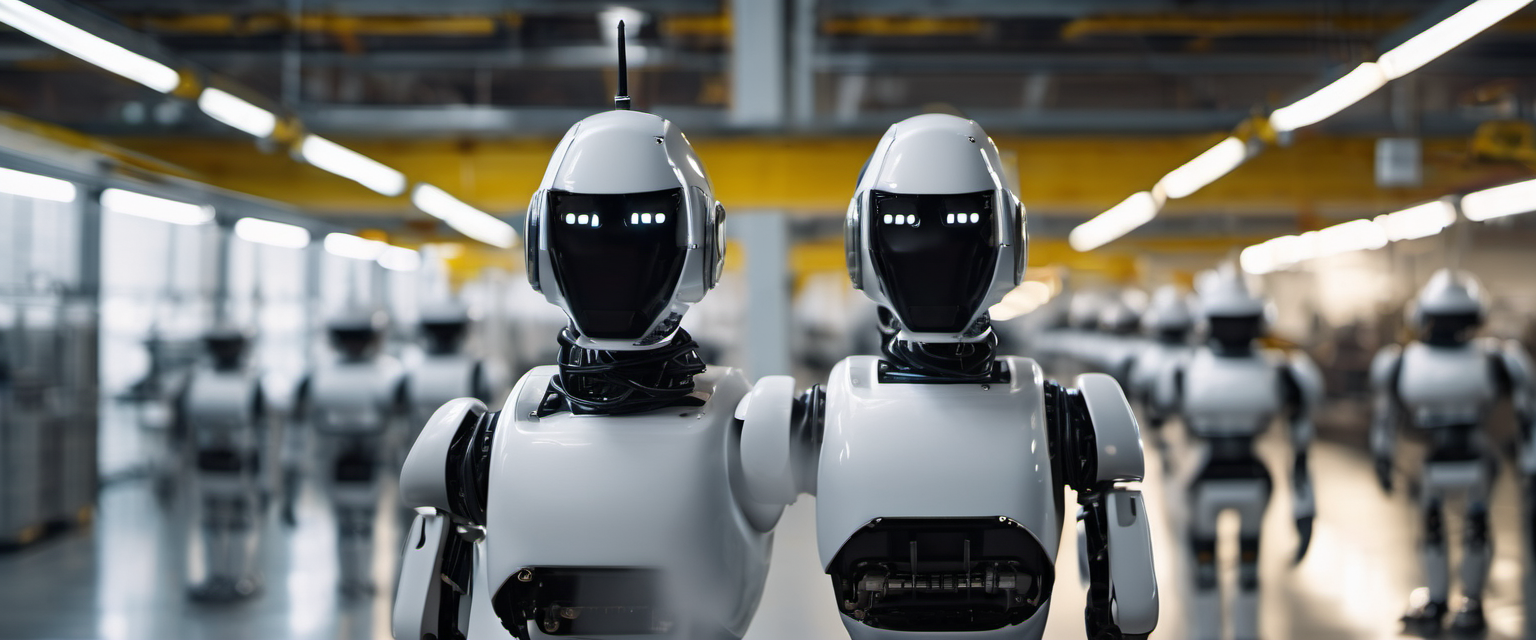
The cleanest way to read Figure AI’s BotQ production update, which the company shared in late April and which got a fresh data refresh on May 8, is to look at the production curve and the deployment curve side by side. Figure’s production curve is doing exactly what a manufacturer wants a production curve to do. The deployment curve — the rate at which finished Figure 03 units actually start performing paid work in the field — is doing something else.
The production milestone is real and impressive. As of late April 2026, BotQ in San Jose is producing one Figure 03 humanoid per hour, a 24x throughput improvement in roughly four months. Monthly shipments roughly doubled three months in a row: ~60 in February, ~120 in March, ~240 in April. The cumulative total has crossed 350 third-generation units. End-of-line first-pass yield — the share of robots passing initial quality checks without rework — is reported above 80%, which is a strong number for a new line. Typical automotive plants start below 70% and take years to reach 90%.
That is the cleanest version of the news. The harder version of the news is what the deployment side of the same business looks like in the same week.
What BotQ has actually achieved
Figure’s own write-up lays out the manufacturing achievement plainly:
- Throughput: ~1 Figure 03 per hour as of late April 2026, up from ~1 per day in January.
- Capacity ceiling: BotQ’s reported nameplate is approximately 12,000 units per year at full utilization, per The Robot Report.
- Workstations: more than 150 connected stations with custom internal manufacturing software.
- Cumulative units: 350+ Figure 03s through BotQ as of the May 8 eweek update.
- Yield: end-of-line first-pass yield above 80%, well above what automotive plants typically achieve at this stage.
- Funding: $1B+ raised at a reported $39B valuation, the highest in the humanoid sector.
That is a credible mass-production story. Brett Adcock has accomplished, in 120 days at BotQ, the kind of throughput ramp that took the early Tesla Model 3 line months of weekend-shift overtime to match. The doubling cadence is the relevant signal: if April was 240 units and May continues the doubling, May lands near 480. At that pace, BotQ exits 2026 with a cumulative install base above 5,000 units, which would make Figure the largest single-source humanoid OEM outside of China.
The deployment curve that doesn’t match
Now the awkward part. As of early May 2026, the publicly-disclosed deployment of finished Figure 03 units consists of:
- BMW Spartanburg — the original Figure 02 pilot that scaled into a production-line use case for sheet-metal handling. This is real, ongoing, and is the foundation of Figure’s “we have a paying customer” narrative.
- Internal R&D and demo deployments — the units performing the autonomous overnight runs and the outdoor jogging demo that go viral on social media. These are useful for product development and brand. They are not customers.
- Pilot units shipped to undisclosed partners — Figure has hinted at additional customers but has not, as of this week, named a second large logistics or manufacturing buyer at the BMW scale.
So the company is producing roughly 240 robots per month at a $39B valuation against a publicly disclosed paid deployment that is still essentially one site. That is not a knock on Figure specifically — every humanoid OEM in the world has the same gap. It is the reason Bloomberg’s May 8 piece made the rounds the same week as the Figure update. Both are accurate. Both are about the same industry. They are not, however, about the same problem.
The arithmetic of unit economics in 2026
The question that matters for Figure — and for the entire humanoid sector — is not “can we build them?” but “what does each one cost to build, and what does each one earn once deployed?” Public estimates put Figure 03 unit cost in the low-to-mid five figures, with target unit economics that pencil out only if a robot is logging meaningful productive hours per day on a paying customer’s site, generally in the range of 14–18 hours of useful work, six days a week.
To translate that into an income statement: a $30,000 robot deployed on a Robots-as-a-Service contract at a price comparable to Agility’s Digit at Toyota Canada — typically $30/hour on a multi-year RaaS basis — has to log roughly 1,000+ productive hours per year per unit before the contract pays back the hardware. Build cadence past 240 units a month means BotQ is producing inventory considerably faster than Figure’s commercial team is currently able to convert into paying contracts at that utilization. That inventory is fine for now: Figure controls when robots ship to customers, and the BotQ 12,000-unit annual ceiling means there is plenty of room before the production line outruns the order book.
The risk is what the inventory looks like at the end of 2026 if the second-customer announcement does not arrive. A $39B valuation prices in not just BotQ working but BotQ’s output finding paid work at scale. Those are two distinct problems. Figure has solved the first one. The industry has not yet solved the second one.
Where this fits in the broader humanoid cohort
Figure is now one of three humanoid OEMs publicly claiming five-figure annual production capacity for 2026:
- Figure (US) — BotQ in San Jose, ~12,000-unit annual capacity, 1/hour cadence, 350+ Figure 03 cumulative, $39B valuation, BMW Spartanburg as flagship deployment.
- Unitree (CN) — 10,000-20,000 units targeted in 2026 after 5,500+ shipped in 2025, $3,949 G1 price point, UniStore app marketplace (24 apps as of May 7).
- UBTECH (CN) — Walker S2 mass production began Q4 2025, 800M yuan in orders, partnered with Foxconn for vehicle production, Rossmann logistics pilot in Germany.
- Agility (US) — Salem “Robofab” with reported 10,000-unit ceiling, 7+ Digit units active at Toyota Canada for RAV4 material handling.
- Boston Dynamics (KR/US) — 2026 Atlas allocation fully committed to Hyundai and Google DeepMind, smaller volumes, premium positioning.
- RoboEra (CN) — Series funding May 8, thousand-unit deliveries Q2, China Post + SF Group as deployment partners.
Of those six, only Figure and the Chinese OEMs have publicly visible monthly cadence numbers. Of those, Figure is the only one whose valuation is north of $30B, which means Figure is also the only one whose stock price has the most to lose if the deployment curve fails to bend up to match the production curve in the next two quarters.
What to watch
- The next named customer. A second BMW-scale logistics or auto-manufacturing deployment is the single piece of news that converts BotQ’s throughput from a manufacturing achievement into a commercial one. If it lands by Q3, the $39B valuation looks defensible. If it doesn’t, it doesn’t.
- Helix utilization metrics. Figure has talked about Helix, its in-house vision-language-action model, as the differentiator. The relevant metric for investors is hours of autonomous useful work per robot per day on customer sites, not demo videos. Watch for Figure to disclose that number.
- First-pass yield trajectory. 80%+ on a new line is strong, but the curve to 95% is where unit-cost economics actually move. A flat 80% over the next six months would be a problem; an upward trajectory toward 90 would be the gating signal for the next funding round at a higher mark.
- Inventory disclosures. If Figure files for IPO in 2026 or 2027, the inventory line on the balance sheet will tell the deployment story more clearly than any press release.
The dryly funny part
The single funniest thing about Figure’s May 8 production update is the framing. The company is, accurately, the most successful humanoid manufacturing operation outside of China. It is also, accurately, the humanoid company building robots faster than any of its publicly disclosed customers can deploy them. Both of those sentences are true at the same time, in the same paragraph, about the same factory. The mass production of robots that don’t yet have mass-deployment work to do is the central contradiction of the 2026 humanoid industry. Figure has solved its half of it elegantly. The other half belongs to whichever Fortune 500 logistics buyer goes next.