Six months ago, on a Miami stage at the “Autonomy Visualized” event, Optimus dropped its water bottles trying to hand them to attendees. The clip became one of the most-shared humanoid-robotics-as-comedy moments of December 2025. The remote-operation argument flared up. Take a number, get in line.
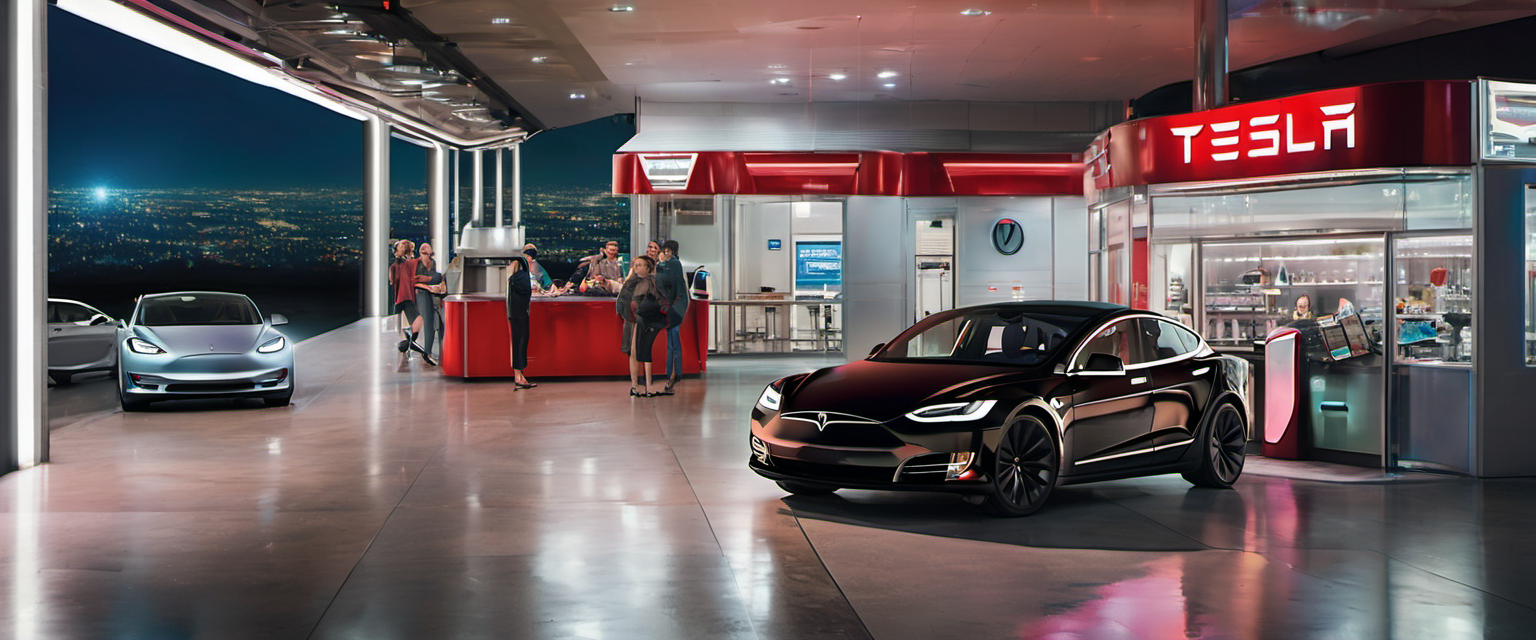
Thursday afternoon, Whole Mars Catalog posted a short clip of Optimus handing water bottles directly to people at the West Hollywood Tesla Diner — no drop, no fumble, no obvious teleoperator. The clip is short. It does not constitute proof of autonomy. Tesla has not confirmed it was unsupervised.
But the trajectory between the two clips is the actual story.
What changed between Miami and West Hollywood
Tesla’s Q1 2026 earnings call confirmed the Gen 3 Optimus hand upgrade: 22 degrees of freedom in the hand, 50 total actuators across both forearms and hands, up from 11 DOF in Gen 2. A water bottle handoff requires four things, in order:
- Locate the bottle (vision).
- Grasp it without crushing it (force-controlled fingers).
- Hold it stably while walking or pivoting (whole-body control).
- Release it into a human’s open hand at the right moment, without releasing too early or too late (force feedback + intent estimation).
The Miami December clip failed at step 4. Specifically, the robot let go before the recipient closed their hand. The fix for that is not bigger compute — it is force sensing in the gripper and an updated release policy. That fix shipped with Gen 3 hands.
A water bottle is still a forgiving object — cylindrical, rigid, mostly empty when handed off. The harder tests — non-standardized objects, soft packaging, partially filled containers, items handed back in unexpected orientations — remain ahead. But the bottle handoff was the named failure in December. Six months later it’s the named success.
The Fremont timeline is what makes this a story
The last Model S and the last Model X ever produced at Tesla’s Fremont factory rolled off the line Saturday, May 9, 2026. The flagship sedan ran for 14 years. The SUV with the wing doors lasted 11. Both lines are being retooled for Optimus production.
Musk’s stated timeline: Optimus V3 reveal in late July, mass production start in Q3 2026, target 1 million units per year by 2027. The water bottle clip lands roughly five weeks before that line is supposed to start producing actual robots.
The reason that timing matters: the public-facing capability of the demo unit is the closest thing the outside world has to a leading indicator for what the factory-facing policy can do. If Optimus can hand a water bottle to a Diner patron in May, the assumption is the units coming off the Fremont line in July are at least at that level. Not perfectly — the demo units historically run more polished software than the factory-floor units — but the demo is a floor, not a ceiling, on the policy stack.
That’s the trade Tesla needs the May 21 clip to make. The Fremont conversion was announced in April. The line has been retooling for six weeks. By Q3, Tesla needs the world to believe a robot rolling off that line can do bimanual manipulation in an unstructured environment. The Diner clip is the marketing groundwork for that belief.
The other May demo videos
Tesla isn’t alone in shipping capability demos this week. The week’s robotics-video tape is its own data point:
- May 18 — Boston Dynamics Atlas. Two videos plus a technical blog showing Atlas lifting and carrying a 50-pound mini-fridge and (per internal testing) loads beyond 100 pounds. The method is RL with whole-body force feedback. Hyundai is targeting 30,000 Atlas units per year at the Savannah plant by 2028.
- May 21 — Tesla Optimus. Water bottle handoff at the West Hollywood Diner. Soft-skill manipulation in a public-facing, unstructured setting.
- Same week — Hugging Face LeRobot. The open-source $2,500 bipedal lower-body release, which inverts the price axis on the same trajectory.
These three videos are the same trajectory at three points on the price axis. Atlas at the heavy-industrial end ($150K+, 30K units/year). Optimus at the consumer-marketing midpoint (target $20K–$30K at scale, 1M units/year by 2027). LeRobot at the floor ($2,500, open source, anyone can fork the repo). The capability curve is moving simultaneously at all three price points. That has not previously been true.
What to watch
- Late July V3 reveal. Tesla’s pattern is to do a major Optimus reveal with new hardware and software at a public event. The May 21 clip is staging. The July event is where the company has to show repeatable, multi-task, autonomous manipulation, not one curated handoff.
- Independent verification. No major outlet has independently verified the Diner clip is unsupervised. Tesla has not issued a statement confirming autonomy. If a second-source clip from a Diner patron shows obvious teleoperation cues, the May 21 narrative collapses.
- Fremont line ramp rate. Musk acknowledged that initial output will be “quite slow” — meaning the first month of Fremont Optimus units is plausibly in the hundreds, not thousands. The relevant number is the Q4 exit rate.
- The cross-comparison with Figure 03 at BMW. Figure’s 40-robot fleet has been running at BMW Spartanburg since spring, with Figure 02 having helped produce 30,000 X3s in its 11-month deployment. When Optimus units start arriving at a Tesla assembly line, the head-to-head number is hours-per-robot per workstation. That is the number that determines whether Optimus competes with Figure or with the Unitree G1.
- The Tesla Diner becomes a public eval set. West Hollywood is now an open lab for Optimus social interaction. Every Diner patron with a phone is a potential failure-mode auditor. The next viral Optimus-fail clip — and there will be one — also lands at that location.
The bottle that got dropped in Miami became the named test. The bottle that got handed off in West Hollywood is the named demonstration of the fix. Five weeks from now, Fremont starts shipping the units that have to do this in front of a paying customer. The question is whether the trajectory between two diner videos extrapolates to a factory floor.
Sources
- TechTimes — Tesla Optimus Completes Water Handoff: Grasp-Transfer Progress Arrives Weeks Before Fremont Ramp (May 21, 2026)
- Basenor — Tesla Optimus Caught Handing Out Water in New Demo
- Teslarati — Tesla Optimus Gen 3 is coming to the Tesla Diner with new ambitions
- evxl.co — Tesla Builds Last Model S And Model X At Fremont, Pivots Line To Optimus Robots (May 10, 2026)
- Electrek — Tesla pushes Optimus V3 reveal later this year, again (April 22, 2026)
- Basenor — Tesla Optimus V3 Reveal Set for Late July
- Botinfo.ai — Tesla Optimus: Complete Analysis of AI, Specs & Future Outlook (2026)
- Interesting Engineering — Tesla Optimus’s fall in Miami demo sparks remote operation debate
- TechTimes — Boston Dynamics Reveals How Atlas Learned to Lift 100-Pound Loads (May 19, 2026)
- Figure AI — F.02 Contributed to the Production of 30,000 Cars at BMW