
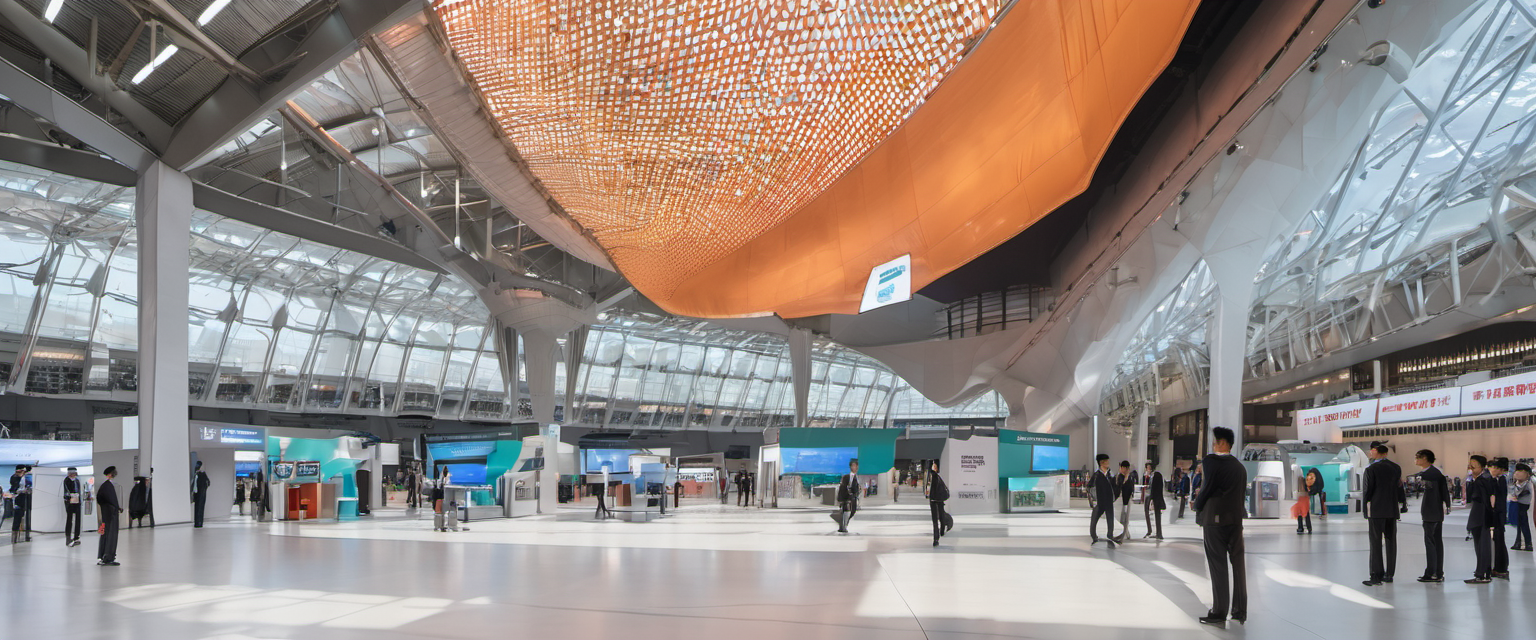
The press release on May 4, 2026 from the GSMA via PR Newswire reads like a marketing flourish. “The GSMA announces the Humanoid Robot Football Penalties Challenge, a new international robotics competition set to debut at MWC26 Shanghai, taking place from 24–26 June 2026.” Penalty shootout. World Cup year tie-in. Crowd-pleasing demo of “advanced connectivity and AI-enabled real-time decision-making, motion control, and precision in humanoid machines.”
IoT Now ran the same release on the same day. The MWC Shanghai site has a dedicated page. Manila Times, Communications Today, Thailand Business News, and a chain of Asia-Pacific business titles followed within twelve hours.
Read past the football. The institutional fact under it is that the GSMA — the trade body that controls Mobile World Congress, the largest annual conference for the global telecom industry — has decided humanoid robotics is the headline exhibit theme for MWC26 Shanghai. The competition is the wrapper. The marketing-zone designation is the substance.
What the GSMA actually decided
MWC Shanghai is the Asia edition of MWC. The flagship Barcelona event in February is bigger; the Shanghai edition exists because GSMA needs an Asia-time-zone, China-friendly venue for the second half of the year. Booth allocation, programming budget, and trade-press attention at the Shanghai event are all routed through the GSMA’s “thematic zones” — typically four to six headline areas that anchor the floor plan and the press tour.
The May 4 release names humanoid robotics as part of the “Mobile AI Innovation Frontiers” zone, alongside “advanced chipsets, hyperscale AI servers, frontier models and AI-native hardware: from robots and glasses to phones and vehicles.” In the GSMA’s hierarchy, that puts humanoid robotics on the same anchor shelf as Qualcomm’s flagship modem, Huawei’s annual Ascend chip drop, and NVIDIA’s Jetson partner pavilion. It is not buried in a startup expo annex.
The competition itself is a curated marquee draw inside that zone. Robotics teams must register their interest by May 31, which gives the Chinese humanoid sector roughly four weeks to enter — Unitree, AGIBOT, UBTech, Galbot, Leju, Booster, Xpeng, Chery’s Aimoga, and the second-tier names like Fourier, Deep Robotics, and Honor’s robotics arm are all plausible entrants.
The marquee draw is, in effect, GSMA-curated proof for an audience of global telecom executives that humanoid robotics is now a category they have to think about — not a category their kids play with on Bilibili.
The organizing committee tells you what this is for
The press release names the organizing committee. Three of the named bodies are not random:
- Xinhua. The state news agency. Xinhua’s English-edition profile of AGIBOT founder Peng Zhihui on May 3 was the most explicit pre-May-Fourth state signal that humanoid robotics is now a strategic-priority sector. Xinhua on this committee means the Chinese state communications apparatus is curating the international read of what humanoid robotics means — not just hosting it.
- AI 100. A Chinese industrial-policy consortium that ranks domestic AI companies for state-procurement guidance and provincial subsidy allocation. Inclusion on AI 100’s lists materially affects which Chinese humanoid firms can bid into State Grid–type contracts. AI 100 on this committee means the procurement steering side of the policy stack is at the table.
- AIIA. The Artificial Intelligence Industry Alliance — China’s MIIT-affiliated standards body, which writes interoperability and safety norms that get cited in Chinese local regulations. AIIA on this committee means the standards-setting side of the policy stack is also at the table.
GSMA, an industry trade body headquartered in London, plus three Chinese state-aligned entities, jointly running a humanoid-robot competition at the Shanghai edition of MWC. That is what the marketing release is wrapping. The penalty shootout is the cover. The institutional alignment underneath it is what the committee disclosure actually signals.
What this is not
A few things the May 4 announcement is not:
- Not a deployment milestone. The competition is a demonstration event. No new products are being shipped, no procurement contracts are being signed, no production capacity is being committed. The Figure BotQ one-per-hour ramp, the State Grid 8,500-unit order, and the JAL Haneda May trial start are deployment milestones. This is not.
- Not a market-moving event. The capitalization of the named Chinese humanoid firms does not move on this announcement. Unitree, AGIBOT, UBTech, and Booster are private; the listed component suppliers (Sanhua, Tuopu, Han’s Laser, etc.) saw no May 4 trading reaction outside their normal range.
- Not a Western counterweight. Boston Dynamics, Figure, 1X, Apptronik, Agility, and Tesla Optimus are not on the announced participant list. They could enter under the May 31 registration window. They have no obvious incentive to show up at MWC Shanghai’s expo floor in mid-summer for a penalty shootout, and historically Western humanoid firms have skipped MWC Shanghai entirely. The expected entrant list is Chinese.
Why telecom cares
The reason the GSMA puts a humanoid-robot zone at the front of the floor plan is not affection for legged locomotion. It is that 5G-A and 6G value propositions need a visual demonstration that does not look like “the same phone, faster downloads.”
Humanoid robotics is the demonstration the telecom industry has been waiting for since 5G shipped in 2019:
- Ultra-low-latency control. A humanoid robot doing a real-time penalty kick over a private 5G network is a one-glance proof of the latency budget that has been a slide in every telecom keynote since 2019 with no concrete killer-app behind it.
- Edge AI inference on operator infrastructure. The Mobile Edge Compute (MEC) story has been a vendor-marketing slide for seven years with no profitable commercial deployment at scale. A humanoid that runs control inference on an operator’s MEC node is a story telecom CFOs can tell their boards.
- Network slicing. A penalty-shootout robot that requires a guaranteed slice of network capacity is the textbook QoS-differentiation story. Operators have been trying to monetize network slicing for five years against largely indifferent enterprise demand.
The GSMA needs humanoid robotics to ship at scale because telecom needs an enterprise-grade revenue justification for the next five years of capex. That alignment of interest is why the Mobile AI Innovation Frontiers zone exists in this form. The football is decoration on the keynote slide deck.
What this changes for the Chinese humanoid sector
The MWC Shanghai expo floor is a recruitment, customer-development, and capital-introduction venue for the named Chinese humanoid firms. Three concrete second-order effects from the May 4 designation:
- The May 31 registration deadline is a forcing function for product readiness. A humanoid robot that can reliably score (or save) a penalty against a moving counterpart in a fluorescent-lit expo hall is roughly a year-end-2025 capability bar for the leading Chinese firms. The competition format does not demand new R&D; it demands stable shippable demos. That is the Chinese sector’s strength right now.
- The Western humanoid firms are absent from a meaningful institutional venue. Apptronik’s $5B-valuation Series A, Figure’s BMW Spartanburg ramp, and 1X’s Hayward factory are real production-capacity stories. None of them get GSMA-curated marquee placement at MWC Shanghai. The institutional venue gap is now concrete.
- The Xinhua-AI 100-AIIA committee is a joint state-industrial vetting layer. Any Chinese humanoid firm that participates is also being implicitly vetted by three state-affiliated bodies for organizational maturity and policy-alignment. For an entrant like Booster (T1 humanoid, founded 2023, recently raised at $300M valuation), participation is a credentialing event with provincial-government and SOE-procurement downstream value.
What LostJobs is watching from now to MWC
- The participant list when it publishes. The number of named entrants and their geographic distribution (China-only vs. mixed) is the cleanest read on whether MWC Shanghai becomes the de-facto Chinese humanoid showcase or attracts Western entrants. We expect 8–14 Chinese entrants and 0–1 Western entrants in the first edition.
- The performance disclosures during the competition. The cleanest comparable spec across Chinese humanoid firms is currently penalty-shootout-style metrics: how reliably the robot kicks under a constrained foot-arc trajectory, how reliably it saves under a constrained hand-arc trajectory, and how stable it remains after the kick or save. These will be the cleanest publicly-comparable benchmark numbers the sector has produced to date.
- The post-MWC procurement deals announced within 60 days. If the competition produces a State Grid–type, China Mobile–type, or telecom-operator-customer–type procurement contract within 60 days of close, the “institutional venue” read above is correct. If it produces only press-release coverage and no contracts, the venue is decorative.
- The 2027 MWC Shanghai theme architecture. Whether the Mobile AI Innovation Frontiers zone is renewed, expanded, or quietly retired is the cleanest signal on whether GSMA’s commitment to humanoid robotics as a marketing draw is durable or one-cycle.
The dry coda
A telecom industry trade body announcing a humanoid-robot football penalty competition is not a market-moving event. It is a visibility event.
The visibility is for an audience of global mobile-industry executives, government delegations, and trade press, who will spend three days in late June 2026 walking past humanoid robots in a designated “Mobile AI Innovation Frontiers” zone curated jointly by GSMA, Xinhua, AI 100, and the AIIA. Most of them will not previously have seen a working humanoid robot in a non-stage demonstration setting. Most of the robots they see will be Chinese.
The football is a wrapper. The wrapper is what drew the May 4 press cycle. The institutional alignment under the wrapper is what the press cycle obscures. The committee disclosure is what tells you what this is for.
The May 31 registration deadline is the next checkpoint. The MWC Shanghai expo floor on June 24 is the one after. The post-MWC procurement-contract activity within 60 days is the one that decides whether this announcement was decoration or substance.
For now, the announcement is what it is: telecom’s global trade body decided humanoid robotics belongs on the marquee shelf for its biggest Asia show, and three Chinese state-affiliated bodies decided to co-curate it. That is more than a football match. It is also less than a deployment.
We will know in eight weeks.