The European industrial-humanoid story took its second confirmed pilot deployment of the year on May 5, 2026.
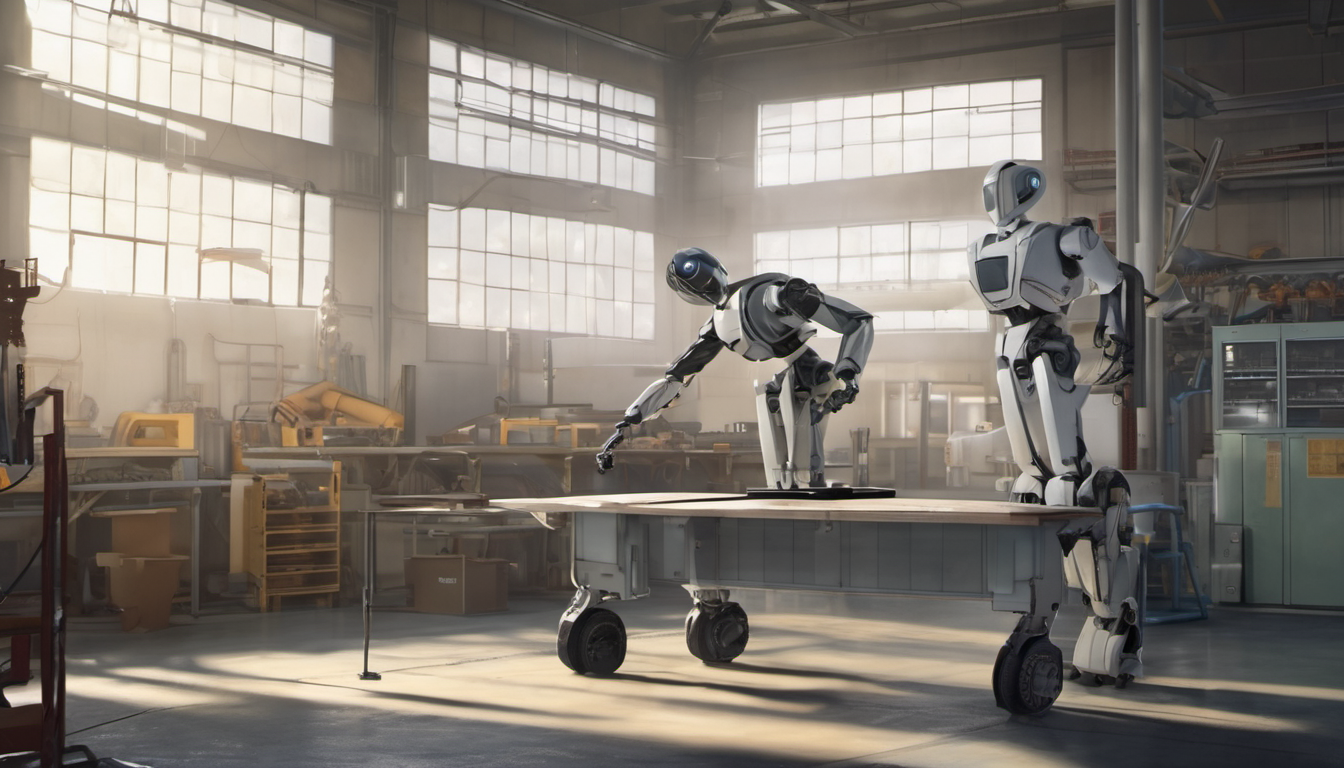
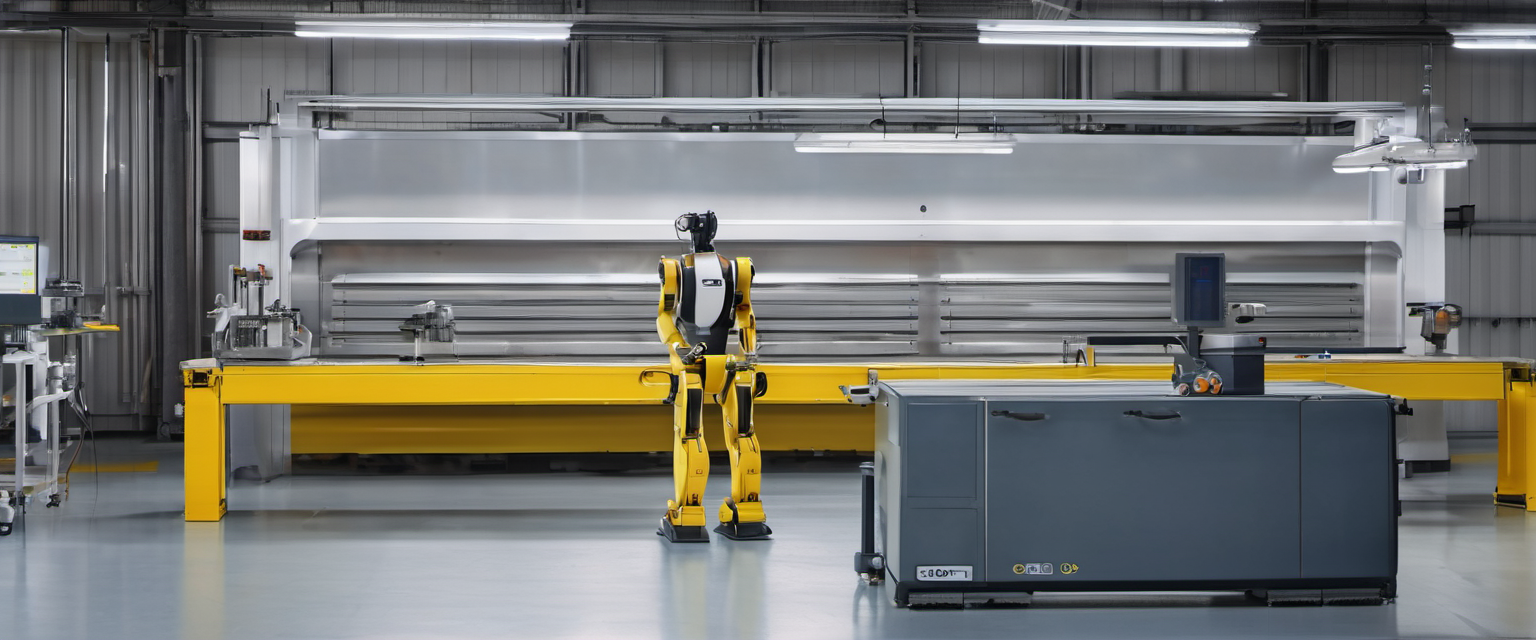
Hexagon AB’s Robotics Division (Zurich) and Fill Maschinenbau, an Austrian precision-engineering company in Gurten (Upper Austria), announced a joint pilot deploying Hexagon’s AEON humanoid into Fill’s real production environments. Per Interesting Engineering’s reporting and Engineering.com, the pilot scope is machine tending, inspection, data capture, and “operational support” inside existing workflows.
This is the second confirmed industrial AEON deployment, following BMW Group’s December 2025 Leipzig pilot, and the first in a non-OEM — a contract precision-engineering shop, not a brand-name automaker. That distinction matters more than it sounds.
Three things about this announcement are not the same shape as the Chinese and US humanoid stories from the same week.
AEON is on wheels, not legs
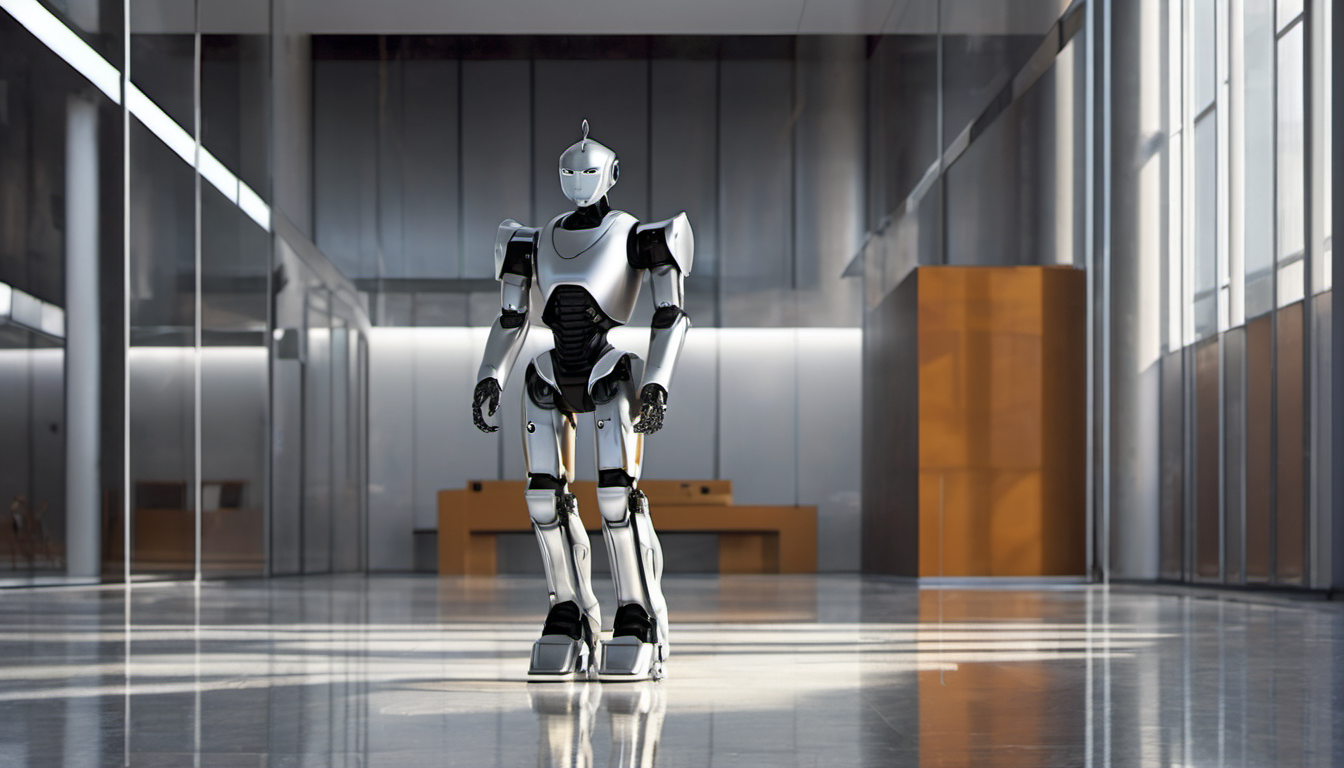
AEON’s locomotion is wheel-based. Per Hexagon’s own spec, it is “designed to operate alongside human workers, supporting manipulation, inspection, and data capture tasks. Its capabilities are enabled by sensor fusion, spatial intelligence, and a wheel-based locomotion system, allowing it to function effectively in industrial settings.”
The week of May 5–8 produced three humanoid news items: Unitree’s UniStore launching with 24 dance-and-martial-arts apps; Figure’s F.03 robots making a bed in two minutes; and AEON entering a real factory in Austria. The first two robots are bipedal. AEON is not. The non-bipedal design is not a regression — it’s an admission that the current generation of bipedal humanoid balance is still calibrated for video demos, not for an eight-hour shift carrying machine-tending workpieces between a CNC and a measurement station. A wheeled torso with two arms and a sensor head is the engineering compromise the European industrial vendors are converging on. Fill Maschinenbau’s clean-floor, structured-aisle factory is exactly the environment that compromise was built for.
The mission is amplification, not replacement
The Hexagon press release’s framing — repeated by every downstream outlet — is that AEON is 「a complement to established automation systems」, not a replacement for existing CNC, CMM, or robotic-cell installations. The pilot’s stated goal is to “validate how humanoids can enhance autonomy, improve efficiency, and expand workforce productivity, particularly in complex environments like high-mix production and precision assembly.”
That language is, almost verbatim, the 「people amplification」 pattern Gartner identified on May 5 as the one correlated with positive AI-investment ROI (covered separately on this site). The European industrial-humanoid story is, in the May-2026 frame, the cleanest live test case of the Gartner thesis: a humanoid deployed alongside the existing workforce, in a complex high-mix environment, with stated ROI targets denominated in efficiency and throughput rather than in headcount reduction.
It is also why Fill Maschinenbau matters in a way an OEM pilot like BMW Leipzig does not. Fill is the contract precision-engineering layer that supplies real production lines to OEMs across European automotive, aerospace, and energy. A successful AEON pilot at Fill means the platform validates across the high-mix contract-manufacturer category — the part of European industry that, structurally, was never going to retool around a $30,000–$75,000 fixed-cell robot but could plausibly justify a $200K-class flexible humanoid that runs three different machines in a single shift.
NVIDIA Isaac is the actual platform
The other thing worth saying out loud is that AEON’s brain is, end-to-end, NVIDIA’s industrial-robotics stack. Per Interesting Engineering and Hexagon’s own materials:
- Training: NVIDIA Isaac Sim + NVIDIA Isaac Lab for simulation-first skill acquisition
- Real-time inference on-device: NVIDIA Jetson Orin, with a planned upgrade to NVIDIA IGX Thor for industrial-safety collaboration
- Skill transfer: NVIDIA Isaac GR00T and Mimic for learning from human demonstrations and synthetic-motion data generation
- Digital twin and fleet ops: NVIDIA Omniverse, integrated with Hexagon Reality Cloud Studio via HxDR
Per Hexagon, the simulation-first pipeline reduces training cycles from months to weeks. That is the specific engineering claim worth tracking against the BMW Leipzig pilot data when the six-month numbers land.
The platform layer matters more than the chassis. UniStore is, structurally, a 24-app dance library shipped on Unitree’s own G1 SDK. Figure’s F.03 is shipped on Figure’s proprietary Helix stack. AEON is the first major European industrial humanoid that has standardized on NVIDIA’s robotics stack end-to-end. If AEON works at Fill, the platform that wins is the same platform underwriting 1X’s NEO factory in Hayward, several Hyundai pilots, and most non-Chinese OEM programs — i.e., NVIDIA, not Hexagon.
What to watch
- Whether Fill publishes pilot KPIs at 90 and 180 days in machine-tending throughput and inspection accuracy. The BMW Leipzig pilot has not yet published quantitative data; Fill could.
- Whether the wheel-vs-legs split becomes a category divide in the second half of 2026. If Fill and BMW Leipzig publish wheeled-humanoid productivity numbers before Figure or Unitree publish bipedal-humanoid numbers from a real factory floor, the bipedal-humanoid investor narrative gets harder to sustain.
- Whether NVIDIA’s robotics stack becomes the de facto cross-vendor standard the same way CUDA did for GPUs. AEON is the third major industrial-humanoid program to commit to Isaac Sim + Jetson + GR00T + Omniverse as the full stack.
- Whether the European Commission’s industrial-strategy team picks up AEON as a flagship case study for the EU AI Act’s “high-risk industrial AI” track. The Gurten pilot is the cleanest jurisdiction-of-deployment story available right now.
The dryly funny part is the geography. In the same calendar week that a Chinese platform launched 24 dance-and-martial-arts apps and an American platform put two robots in a bedroom to make a bed, a Swiss-Austrian partnership quietly put a wheel-based humanoid into a real precision-engineering shop to tend a machine. The visual is unflattering for the first two announcements. The ROI math, if Gartner’s framing holds, is unflattering for them too.