
Figure 02
Made by Figure AI
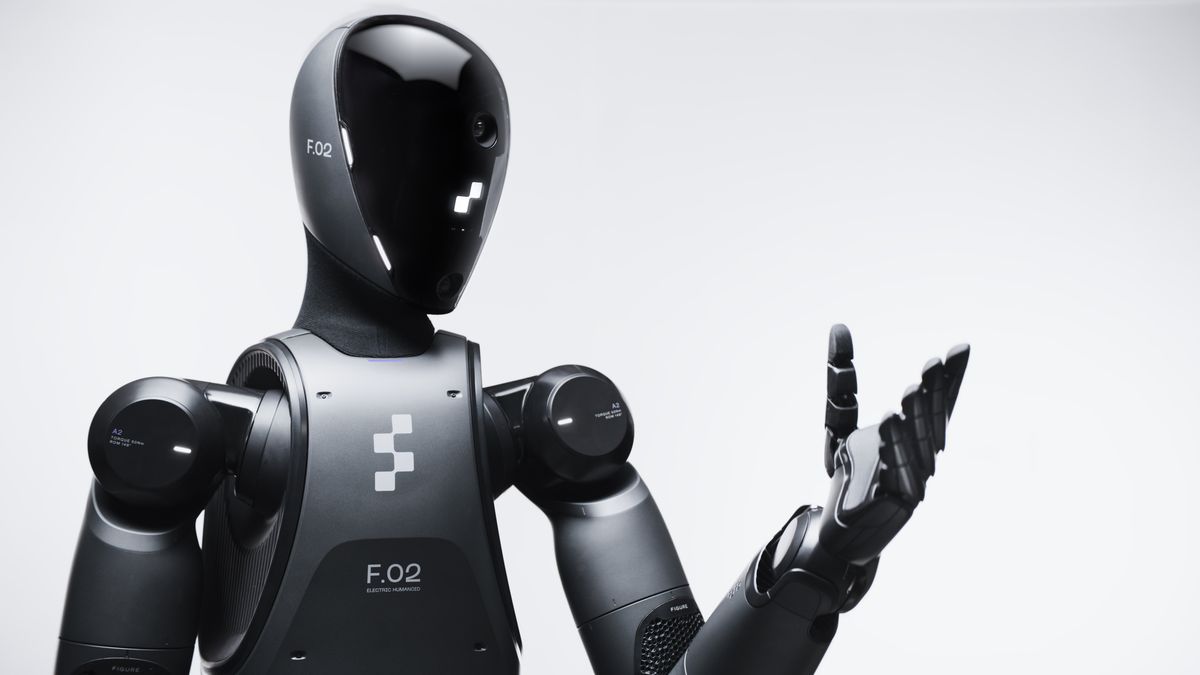
Photo: Figure AI (via IEEE Spectrum)
- cameras
- 6
- dof hands
- 16
- dof total
- 35
- height cm
- 168
- vla model
- Helix 02 (full-body autonomy)
- weight kg
- 70
- battery kwh
- 2.25
- arm payload kg
- 25
- charge time hr
- 1.5
- battery runtime hr
- 5
Who's exposed
Jobs in the threat radius
- automotive assembly worker
- warehouse picker
- light manufacturing operator
- sheet metal handler
Deployment status
Shipping commercially to enterprise customers. The BMW pilot at Spartanburg ran 10-hour shifts five days a week for 11 months, accumulating 1,250 hours of runtime and handling more than 90,000 sheet metal parts with 5-millimeter precision in 2-second cycles — work that contributed to the production of over 30,000 BMW X3 vehicles. In March 2026 BMW expanded the program to Plant Leipzig — the first humanoid robot deployment on German soil — and established an internal 'Center of Competence for Physical AI in Production' to formalize the discipline across the BMW Group. Figure has separately confirmed delivery of Figure 02 units to a paying commercial customer outside BMW. Figure also operates BotQ, a manufacturing facility targeting 12,000 humanoids in year one and scaling toward 100,000/year.
When this hits the labor market
1-2 years for automotive assembly line tasks where the BMW playbook can be replicated. 2-4 years for broader light-industrial deployment. The economics work at scale when one Figure runs 10-hour shifts replacing a wage that compounds — automotive is the natural first market because the integrator cost is amortized across high-volume production lines.
Is this robot coming for your job?
Press releases speak in averages — LostJobs talks about your role. Find out which parts of your job hold up and which don't. Free.
Talk to LostJobs about my future
The humanoid that survived contact with a real factory
Figure 02 is one of the few humanoid robots that has actually clocked production-floor hours, not just demo reel hours. The BMW Spartanburg pilot wasn’t a single staged stunt — it was 11 months, 10-hour shifts, 1,250 hours of runtime, and 90,000-plus sheet metal parts handled to 5-millimeter precision. That’s the threshold most humanoid platforms haven’t crossed: actually being trusted on a paying customer’s line, day after day, without a human babysitter.
What you’re getting
168 centimeters, 70 kilograms, 35 degrees of freedom across the body and another 16 in the five-fingered hands. Twenty-five-kilogram arm payload — enough for the parts most factory workflows actually move. Five hours of battery on a 2.25-kWh torso-integrated pack, 1.5-hour quick charge. Six cameras feeding into Helix, Figure’s vision-language-action model that controls the upper body at 200 Hz and was upgraded to full-body autonomy with Helix 02 in early 2026.
Figure is also building its own factory (BotQ) targeting 12,000 humanoids in year one and scaling toward 100,000/year. That manufacturing scale-up is what makes the BMW pilot interesting beyond the photo op — Figure is positioning to actually deliver fleets, not lab one-offs.
In March 2026 BMW expanded the program to Plant Leipzig, the first humanoid deployment on German soil, and stood up an internal “Center of Competence for Physical AI in Production” — the BMW Group treating humanoids as a discipline that needs an in-house competency, not a vendor demo. The same week, Figure confirmed it had delivered Figure 02 units to a paying commercial customer outside BMW. The narrative is no longer “one factory pilot” — it’s a second BMW site, a second customer, and a manufacturing line designed to produce more humanoids than there are auto plants to put them in.
Why we care for LostJobs
The first jobs in the threat radius are the ones BMW already proved out: standardized, repeatable handling tasks in environments designed for the line. Sheet metal feeding, parts staging, simple sub-assembly. The wage these robots replace isn’t minimum wage — it’s the $25–35/hour automotive assembly job that compounds with benefits, training, and turnover cost. That math closes faster than the public perception suggests, especially once Figure 03 (with washable textiles and tactile fingertips) finishes ramping. If you work in automotive manufacturing or adjacent light-industrial assembly, this is the platform to watch — not because it will replace you tomorrow, but because the people deploying it have already demonstrated they will.